
![Data Science vs Data Engineering: The Key Difference [Softermii' Manual]](https://cdn.sanity.io/images/wg2e4dts/development/1191e1e3d63f8979ed35c62f4463ee604b295c2a-1200x630.webp?w=1200&fit=max&auto=format&q=95)
Data Science vs Data Engineering: The Key Difference [Softermii' Manual]

Want to know more? — Subscribe
Is your organization developing data-driven strategies? Then it's important to understand the difference between data science and data engineering in both…
Is your organization developing data-driven strategies? Then it's important to understand the difference between data science and data engineering in both cases. Today, both these fields are driving organizational success and innovation nowadays.
At Softermii, we have over nine years of experience in software development, and we would like to share insights into data engineer versus data scientist positions.
This article will explore the key differences and explain the responsibilities, skills, and expertise needed for both positions. We'll also examine the tools and techniques and discuss the salaries and job market trends in data science and data engineering.
Want a skimmable version?
Get a quick overview of our article with AI to access all the important information quickly.
Generate AI SummaryHide summary
Want a skimmable version?
Get a quick overview of our article with AI to access all the important information quickly.
Generate AI SummaryHide summaryData science vs data engineering — how the two roles differ in responsibilities, skills, tools, and where each fits in a data-driven organization.
Defining Data Science
Data science analyzes and interprets complex data sets using statistics, mathematics, computer science, and domain expertise. It aims to find insights from different types of data using scientific methods, algorithms, and systems. The goal is to help organizations make better decisions by predicting future trends and shaping business strategies.
The Data Science Life Cycle involves:
- understanding the business problem;
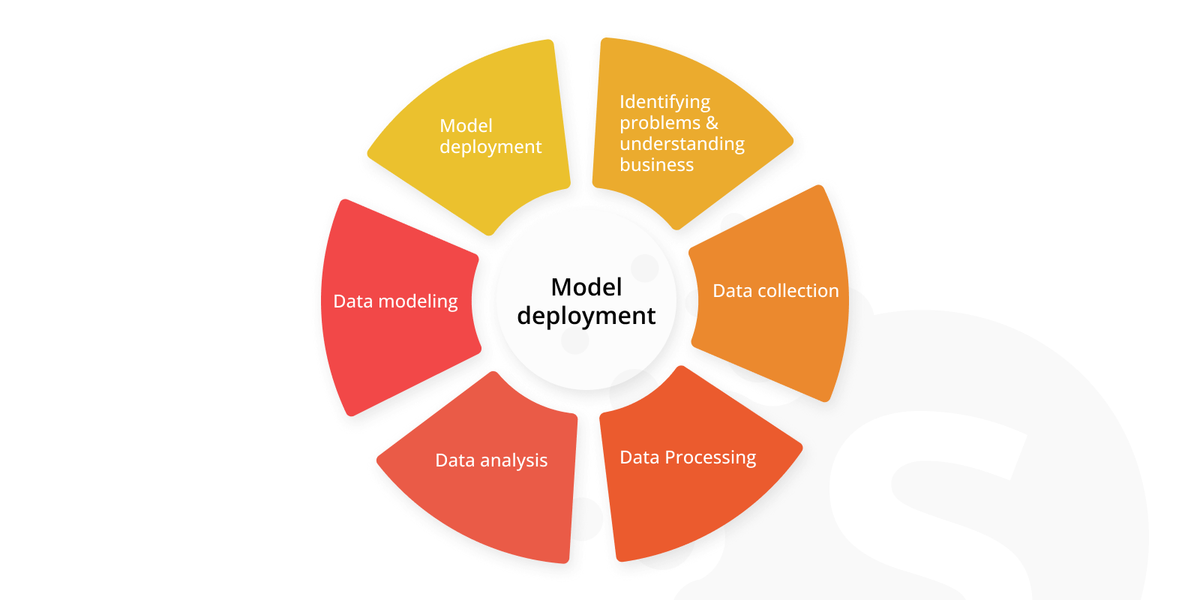
- extracting data;
- cleaning and preparing data;
- analyzing data to find patterns;
- building models;
- deploying models for use.
In business, data science is used to improve processes, enhance customer experience, increase efficiency, and drive profitability. It helps in targeted marketing, inventory prediction, and fraud detection. In healthcare, data science can be used for disease prediction and personalized medicine. In environmental science, discipline is used for natural disaster forecasting and studying climate patterns.
Overall, data science aims to understand data patterns, extract value from them, and use that understanding to solve real-world problems.
Defining Data Engineering
Data engineering is centered on designing and developing data collection, storage, and processing architectures. It ensures accurate and consistent data for the data scientist and business analyst in IT.
Key aspects of data engineering are creating data pipelines for automating data movement and transformation and building robust data infrastructure for storing and processing data. Another central part of this discipline is data management, which ensures consistent access to and delivery of data across various applications and business processes.
Tools and technologies data engineers use vary a lot:
- traditional relational database management systems like SQL Server and MySQL;
- big data technologies like Hadoop and Spark;
- cloud platforms like AWS, Google Cloud and Azure;
- workflow management tools like Airflow and Luigi.
Data engineering focuses on making data more accessible and useful for organizations, enabling more informed, data-driven decisions by creating reliable pipelines, infrastructures, and management systems.
Key Differences Between Data Science and Data Engineering
Both fields play critical roles in any data-driven organization, but are data science and data engineering different when it comes to skill sets, expertise, and responsibilities? The short answer is no, and here's why:
Skill Sets and Expertise Required
Data science:
Data science involves extracting insights from data to make informed decisions and solve complex problems. To excel in this field, proficiency in the following areas is crucial.
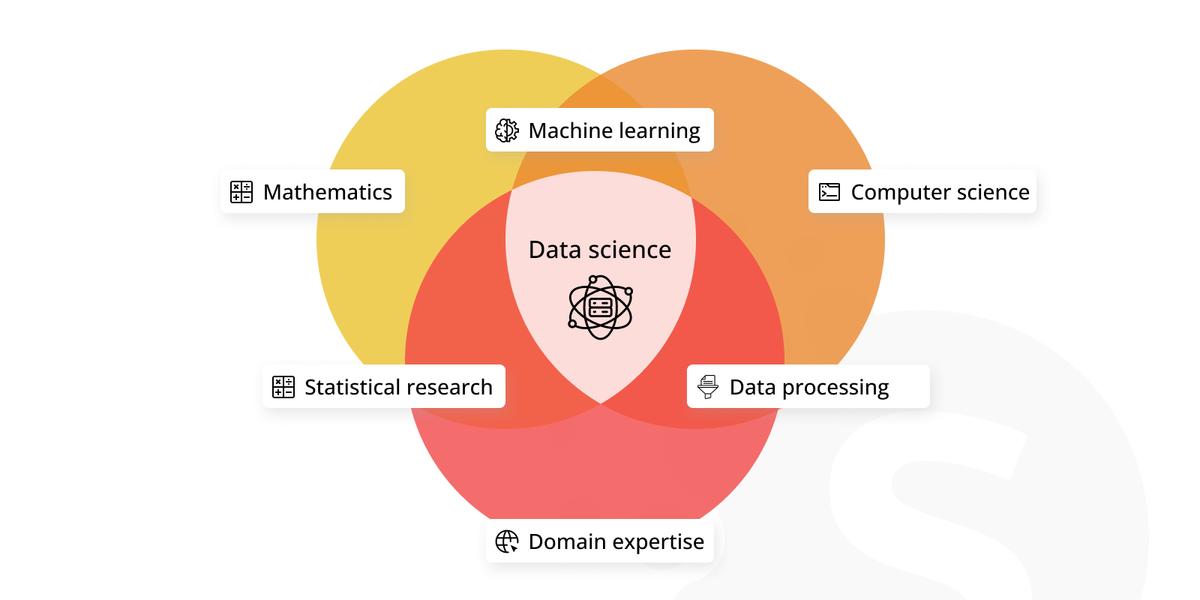
Statistical Analysis. Data scientists need a strong foundation in statistical techniques, hypothesis testing, regression analysis, and predictive modeling. This knowledge allows them to uncover meaningful patterns and relationships within data.
Programming and Data Manipulation. Proficiency in programming languages like Python or R is essential. Data scientists should be adept at manipulating and analyzing data, handling large datasets efficiently, and performing data preprocessing tasks.
Machine Learning. To build a model that can learn from data and make accurate predictions, you need to understand classification, regression, clustering, and dimensionality reduction algorithms.
Data Visualization. Data scientists should know how to represent complex data using tools like Matplotlib, Seaborn, or Tableau. Effective data visualization helps communicate insights to stakeholders clearly and compellingly.
Domain Knowledge. It allows data scientists to understand the nuances of the data, ask relevant questions, and generate meaningful insights.
Data Engineering:
Data engineering focuses on designing and maintaining data infrastructure and systems. Skills in the following areas are essential for success in this field:
Data Warehousing. Data engineers should understand data modeling, ETL processes, and database management systems. This knowledge enables them to create efficient data storage and retrieval systems.
Programming and Data Manipulation. Proficiency in languages like SQL, Python, or Java is necessary for data engineers to extract, clean, transform, and load data into appropriate data repositories. Strong programming skills help ensure data quality and integrity throughout the data pipeline.
Big Data Technologies. Data engineers must be familiar with big data frameworks and distributed computing concepts to handle and process large volumes of data efficiently.
Data Integration. Data engineers need expertise in integrating diverse data sources and formats. They ensure data consistency, quality, and reliability throughout the data pipeline.
Cloud Computing. Knowledge of AWS, GCP, or Azure platforms is increasingly important in data engineering. Data engineers leverage cloud computing to build scalable and cost-effective data processing systems and reduce cloud storage costs.

Project Calculator
Get the detailed project estatimation – choose the details of your product and calculate the quote of the development
Calculate nowData Scientists
Data scientists are primarily responsible for extracting insights from data. They design and implement models that help businesses make better decisions. Tasks often include data cleaning and preprocessing, exploratory data analysis, feature selection, and engineering. Data scientists build predictive models and visualize and communicate results to stakeholders. Also, they can be involved in the design of data collection systems and data-driven products.
Data engineers
Data engineers are the builders and maintainers of the data infrastructure. They design, construct, install, test, and maintain highly scalable data management systems. They are responsible for creating and integrating APIs for data consumption, developing data pipeline architecture, and optimizing systems for performance and scalability. Data should be readily available for data scientists in a usable format. Data engineers also ensure the data assets are securely stored in hardware and are appropriately accessible.
Tools and Technologies: Data Science vs Data Engineering
Another great data science and data engineering difference involves a variety of tools and technologies used in these areas. Some may overlap, but their focus areas differ, with data scientists centered on analysis and insight extraction and data engineers focused on the data storage, processing, and retrieval infrastructure.
Data Science
Data science involves various programming languages and frameworks. The most commonly used languages are Python and R.
Python has a rich ecosystem of libraries:
- Pandas for data manipulation;
- Matplotlib and Seaborn for data visualization;
- Scikit-learn, TensorFlow, and PyTorch for machine learning.
R is another powerful language primarily used for statistical analysis and visualization. Its most popular libraries are:
- ggplot2 for visualization;
- caret for machine learning.
SQL allows data scientists to retrieve and manipulate data stored in relational databases.
Jupyter notebooks are often used for coding, visualization, and sharing work.
Data scientists may use SQL or NoSQL databases like MongoDB for data storage and manipulation.
Tools like Tableau and Power BI are also used for data visualization and business intelligence.
Data Engineering
Data engineering involves a variety of tools and technologies.
Databases:
- SQL is the standard language for interacting with databases.
- NoSQL databases: MongoDB and Cassandra are used when scalability and speed are needed.
For dealing with big data, knowledge of Hadoop and Spark is necessary:
- Spark has built-in modules for SQL, streaming, and machine learning;
- Hadoop allows for the distributed processing of large datasets across clusters of computers.
Data engineers also use ETL (Extract, Transform, Load) tools for data integration:
- Informatica PowerCenter;
- Microsoft SQL Server Integration Services (SSIS);
- Talend.
How to Manage a Remote Software Dedicated Team Successfully
Best practices of outsourcing web and mobile development
Hire a teamWorkflow management tools that help in automating and monitoring data pipelines:
- Apache Airflow;
- Luigi.
Cloud platforms that provide services for data storage, processing, and analysis:
- Microsoft Azure;
- Amazon Web Services;
- Google Cloud.
Data Scientists vs Data Engineers: Salary Range and Job Market Trends
When considering a new career, one of the parts is salary and market trends research. Both data science and data engineering are in high demand, but the pay can vary depending on experience, education, location, industry, and the term of employment.
Data Scientists Salaries
First, let's examine how experience and education may affect the data scientist's salary. There are three categories in the table:
- Entry-level data scientist with a bachelor's or master's degree and little to no experience;
- Mid-level data scientists with a few years of experience and specialized skills, such as proficiency in deep learning;
- Senior data scientists, including managers and those with a Ph.D.
| Experience level | Data Scientist |
|---|---|
| Entry-level | $112,416 |
| Mid-level | $151,121 |
| Senior-level | $201,369 |
The industry choice also greatly affects your salary as a data scientist. Glassdoor reports that the top five US-paying industries are information technology, real estate, agriculture, retail & wholesale, and financial services.
| Industry | Total Pay | Total Pay Insight |
|---|---|---|
| Information Technology | $177,298 | 13% higher than other industries |
| Real Estate | $165,527 | 6% higher than other industries |
| Agriculture | $162,735 | 5% higher than other industries |
| Retail & Wholesale | $162,720 | 5% higher than other industries |
| Financial Services | $159,757 | 3% higher than other industries |
Geography also is an important detail. According to talent.com, California has the highest salaries in data science – $153,208, while Indiana offers only $98,150 per year.
| Region | Salary |
|---|---|
| California | $153,208 |
| Delaware | $151,950 |
| New York | $150,000 |
| Arkansas | $147,000 |
| Washington | $146,800 |
| Connecticut | $145,600 |
| Wyoming | $143,988 |
| New Mexico | $142,500 |
| Massachusetts | $141,781 |
| Maryland | $140,745 |
Things also differ if you work outside the US:
| Country | Salary |
|---|---|
| Australia | $112,510 |
| Germany | $106,634 |
| United Kingdom | $130,239 |
| Canada | $118,408 |
| Poland | $61,238 |
| France | $79,151 |
| Spain | $68,158 |
Data Engineers Salaries
Now you know what to expect as a data scientist, let's learn about your salary in the data engineering field. Once again, we'll start with how your experience affects your salary as a data engineer. As you may guess, in this field, experience also leads to higher salaries:
| Experience level | Data Engineer |
|---|---|
| Entry-level | $75,990 |
| Mid-level | $115,349 |
| Senior-level | $170,040 |
The top 5 paying industries for a data engineer in the United States are education, IT, energy, mining & utilities, arts, entertainment & recreation, and real estate.
| Industry | Total Pay | Total Pay Insight |
|---|---|---|
| Education | $162,963 | 18% higher than other industries |
| Information Technology | $147,971 | 10 %higher than other industries |
| Energy, Mining & Utilities | $146,710 | 9% higher than other industries |
| Arts, Entertainment & Recreation | $145,536 | 8% higher than other industries |
| Real Estate | $141,667 | 6% higher than other industries |
Similar to data science, location significantly impacts salary. As a data engineer, you may benefit if you're working in West Virginia, as the average salary there is $200,000 per year. Oklahoma, however, offers the lowest salary in the US; the annual rate there is $112,125. Let's look at the top 10 states with the highest salary for data engineers.
| Region | Salary |
|---|---|
| West Virginia | $200,000 |
| California | $151,542 |
| New York | $148,118 |
| Maryland | $146,367 |
| Washington | $146,017 |
| Virginia | $145,251 |
| New Jersey | $141,319 |
| Vermont | $140,000 |
| Massachusetts | $140,000 |
| New Mexico | $136,850 |
Once again, the salaries in other countries are significantly lower than the US ones:
| Country | Salary |
|---|---|
| Australia | $117,161 |
| Germany | $102,237 |
| Canada | $116,900 |
| United Kingdom | $127,600 |
| Poland | $65,586 |
| Spain | $67,058 |
If you understand that working in a company is not your option, you can look for freelance projects. Platforms like Upwork and Fiverr offer rates-per-hour and fixed-rate jobs depending on a project.
Note that additional certification or training and expertise in niche areas can also impact salary ranges for both fields.
Global Offshore Software Development Rates By Country in 2023
Check the prices for software development services and the overview of offshore hourly rates by country.
Hire a teamConclusion
Throughout this article, we've uncovered key distinctions between data science vs. data engineering. We've dived into the responsibilities, required skills expertise and explored the salary details and job market between data science and data engineering.
By understanding the differences between data science and data engineering, you'll be well-equipped to make informed decisions. You don't need to question yourself: data science and data engineering, which is better?
At Softermii, we've got extensive experience in providing you with top-notch data specialists and unrivaled data practice services. Whether you need data scientists or data engineers, we have the knowledge and resources to support your organization's ideas. Reach out to our team at Softermii, and let's leverage the benefits of these dynamic disciplines in your journey toward success.
Boost your business with high-quality data services — reach out to the Softermii team for top-tier data scientists and engineers that understand your business needs.
Frequently Asked Questions
Can someone transition from data engineering to data science or vice versa?
Yes, transitioning between data engineering and data science is possible. There are overlapping skills and knowledge in both fields, such as programming and data manipulation. However, transitioning may require additional learning and skill development in the specific areas where the individual lacks expertise. It can be beneficial to acquire knowledge in statistical analysis and machine learning for data engineers interested in transitioning to data science or in data infrastructure and big data technologies for data scientists interested in transitioning to data engineering.
Can data science and data engineering be combined into a single role?
While there can be an overlap between data science and data engineering, they are distinct disciplines with different focuses. However, in smaller organizations or startups, individuals may be required to perform data science and data engineering tasks. You may find positions called "data scientist with engineering skills" or "data engineer with analytical skills." In larger organizations, it is more common for data science and data engineering to be separate roles, with collaboration and coordination between the two teams.
How do data scientists and data engineers collaborate on projects? What is the nature of their interaction and the division of responsibilities?
Data scientists and data engineers collaborate closely on projects. Data engineers provide clean and reliable data infrastructure, ensuring data accessibility and quality. Data scientists focus on analyzing the data, building models, and extracting insights. They work together to optimize the data pipeline, communicate data requirements, and troubleshoot issues, enabling successful data-driven projects. Collaboration involves data engineers understanding the requirements and needs of data scientists and data scientists providing feedback and insights to improve the data infrastructure. This collaborative relationship ensures the smooth flow of data from collection to analysis and enhances the overall data-driven decision-making process.
How about to rate this article?
61 ratings • Avg 4.5 / 5 · Thanks for rating!
Written by:

CEO & Co-Founder
Slava Vaniukov is the CEO and Co-Founder of Softermii, with more than 10 years on the front lines of software development. He has spent that decade helping founders and enterprises turn ambitious ideas into products that ship — and that perform. Apps built by his teams have been featured on multiple “Top 10 Best App…