Generative AI vs Large Language Models: Discover the Difference

Want to know more? — Subscribe
Generative AI vs Large Language Model stands out as two of the most advanced and innovative technologies in artificial intelligence. The difference between…
Generative AI vs Large Language Model stands out as two of the most advanced and innovative technologies in artificial intelligence. The difference between Generative AI and LLM lies in their capabilities: Generative AI showcases the ability of machines to create new and original content. LLMs can learn from billions of words from diverse sources to produce coherent and relevant texts on any topic or domain. Their applications include answering questions, summarizing texts, writing essays, generating headlines, and more.
Softermii, with over nine years of experience in these technologies, clarifies the primary concept of generative AI vs LLMs across industries. This article discovers Generative AI and LLMs' similarities, differences, applications, and trends.
Want a skimmable version?
Get a quick overview of our article with AI to access all the important information quickly.
Generate AI SummaryHide summary
Want a skimmable version?
Get a quick overview of our article with AI to access all the important information quickly.
Generate AI SummaryHide summaryGenerative AI vs large language models — how the two differ, what each does, and where they're applied across industries.
What is Generative AI?
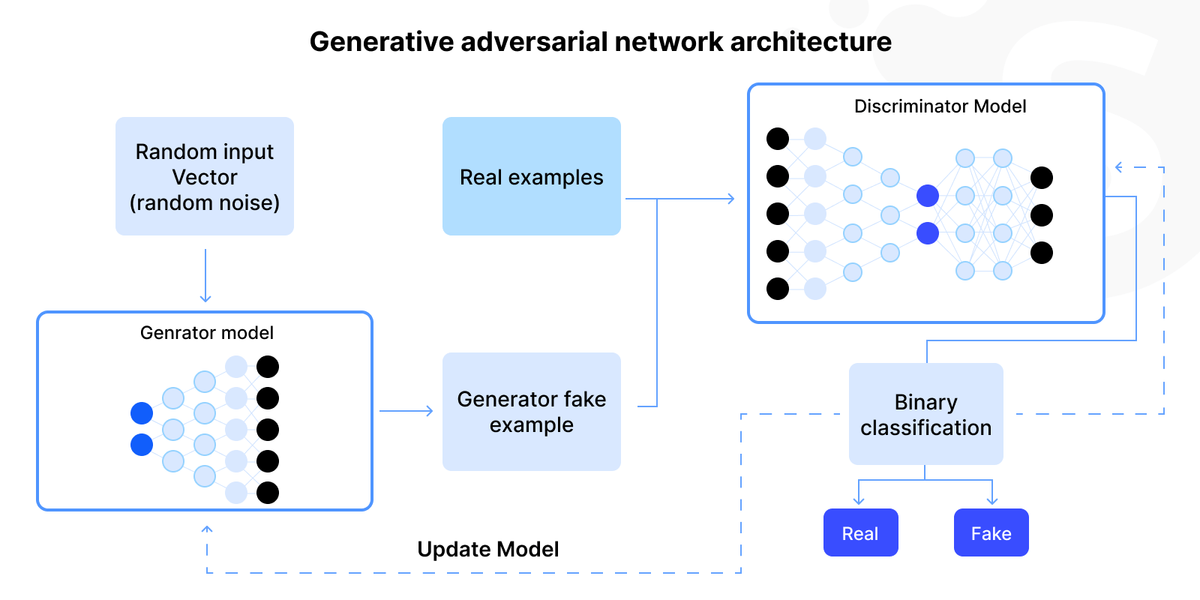
Traditional AI focuses on analysis and decision-making. Meanwhile, generative AI can create and synthesize. It learns from existing data to create new content, such as text, images, and music. Key characteristics of generative AI include:
Learning from Data. It analyzes vast amounts of data to learn patterns, styles, or logic.
Content Creation. It can generate novel content, often indistinguishable from human-created content.
Adaptability. It adapts to various domains like language, visual arts, or music.
Interactivity. Some generative AI models can interact with users. It allows for adapting their outputs based on user input or prompt.
Autonomy and Efficiency. These systems can operate with minimal human intervention, often speeding up creative processes.
Generative AI in Use
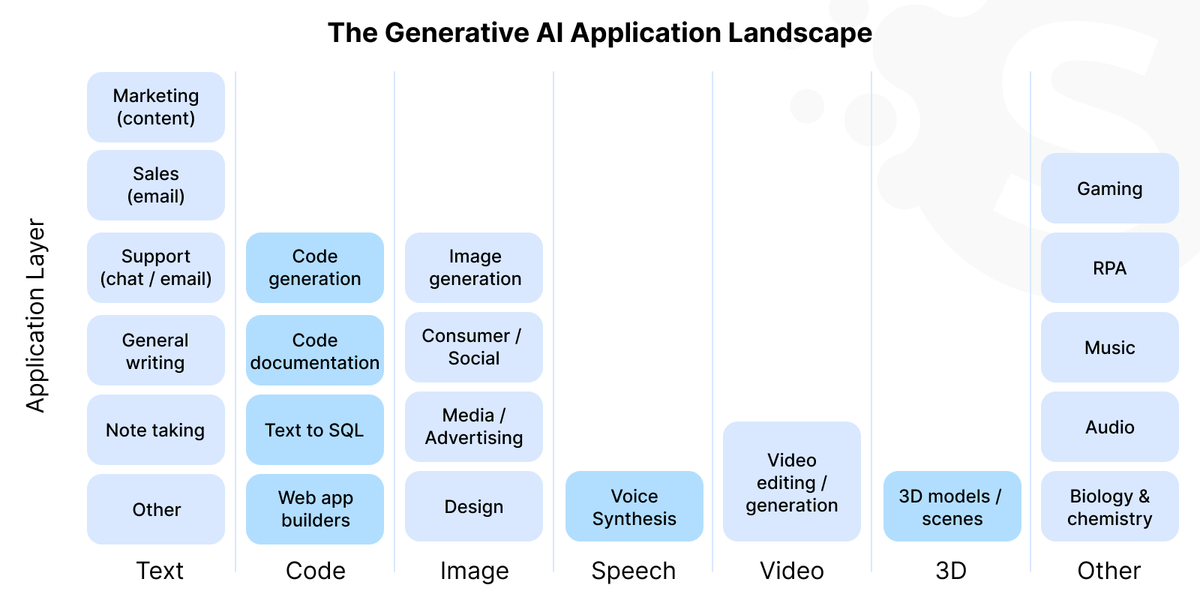
The Generative AI use cases are diverse and encompass various industries. Let’s discover some of them:
- Art and Imagery. AI models can generate unique images and artworks from textual or visual inputs. For example, DALL-E creates vivid, surreal images based on textual descriptions. Meanwhile, DeepArt transforms photos into artworks in the style of famous painters.
- Music Composition. AI tools such as AIVA and Google's Magenta are creating new pieces of music. AIVA specializes in composing symphonic music for films and games. It uses deep learning to analyze classical music and create new compositions. Magenta explores the role of AI in the creative process, producing music and art through machine learning.
- Data Synthesis. Generative AI in healthcare is particularly valuable in data augmentation. AI models like GANs help generate synthetic medical images for training purposes. Moreover, they ensure privacy and enhance the diversity of datasets.
- Personalization in E-commerce. Amazon uses AI to generate personalized product recommendations. This approach enhances user experience and increases sales efficiency.
- Fashion and Design. In the fashion industry, generative AI is used for designing clothes and accessories. Vue.ai analyzes current trends and customer preferences. Thus, it helps brands create new designs and personalized shopping experiences.
- Film and Entertainment. ILM and Wētā FX bring generative AI to life in the film industry. This technology enhances the creation of realistic CGI characters and environments. It can reduce the time and cost involved in traditional methods.
- Gaming. AI models can create dynamic and immersive environments. Games like "No Man's Sky" use AI algorithms to generate vast, explorable universes with unique planets and ecosystems. Thus, they offer players a constantly evolving experience.
Understanding LLMs
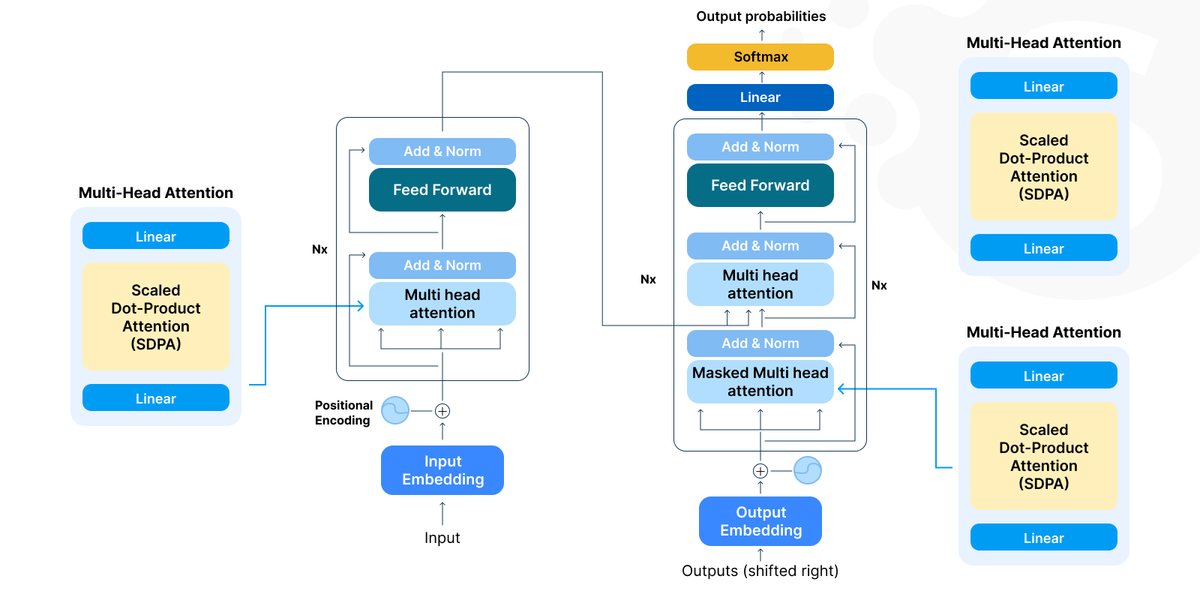
Large Language Models focus on processing and generating human language. These models are trained on vast datasets, enabling them to understand and produce language in a natural-sounding way. LLMs use self-attention techniques to connect words and sentences and make longer, complex texts. Their key aspects include:
- Scale. "Large" refers to the immense size of model training datasets and the complexity of their neural networks.
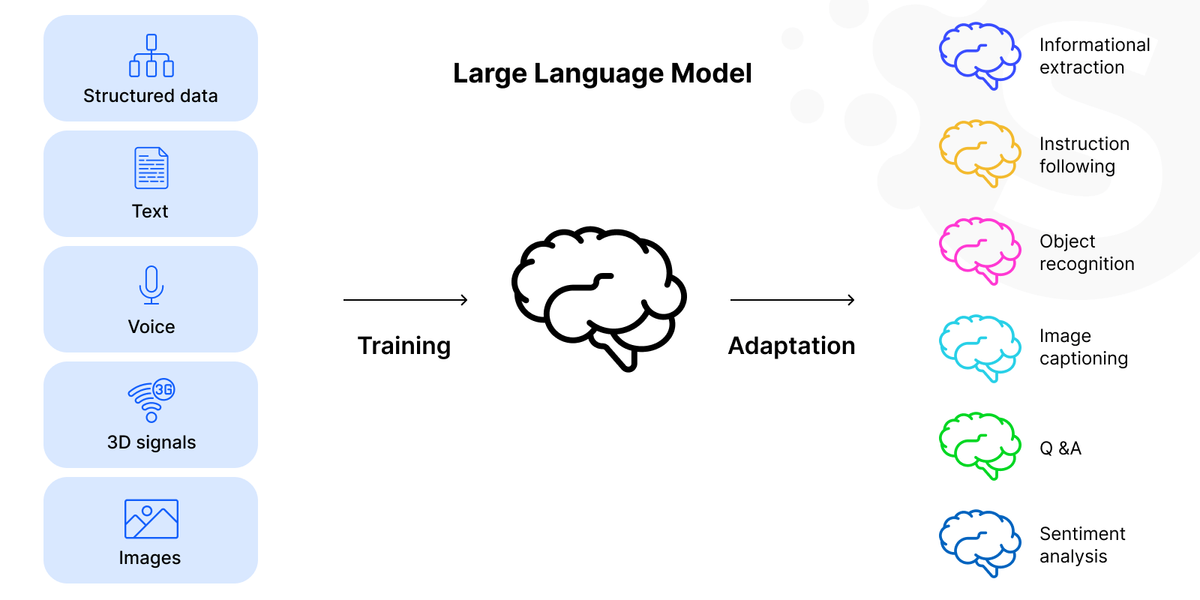
- Learning Process. LLMs learn language patterns, grammar, idioms, and stylistic elements from their training data.
- Contextual Understanding. Models can understand and generate contextually relevant text. Thus, LLMs become useful for tasks requiring a nuanced understanding of language.
- Versatility. LLMs can be applied to various language tasks, from translation to content creation.
- Continuous Learning. Models continue to improve their language capabilities through further interactions and data input.
Examples of LLM Applications
Here are some use cases that demonstrate LLMs' practical and impactful applications. They highlight their role in driving efficiency, enhancing communication, and creating innovative solutions.
- Content Creation. Media and publishing companies use LLMs to generate news articles and creative stories. For example, The New York Times has experimented with AI tools for creating short reports and news summaries.
- Language Translation and Localization. The enhanced quality of AI-driven language translation makes content more accessible globally. You may have seen it in the advanced translation capabilities of Google Translate or similar platforms. The company continuously improves its language models through deep learning.
- Chatbots and Virtual Assistants. Many customer service platforms decide to build an AI assistant for more efficient customer interactions. For instance, Zendesk and Salesforce solutions use LLMs for responding to customer queries.
- Educational Tools. Educational platforms utilize LLMs to create interactive learning experiences. Duolingo personalizes lessons and responds to user queries, making language learning more engaging.
- Accessibility. LLMs play a crucial role in developing accessibility tools. For example, Google's Live Transcribe app can provide real-time speech-to-text transcription. It aids in communication for deaf and hard-of-hearing individuals.
- Business Applications. Companies use LLMs for automating email responses and generating reports. Grammarly AI helps to write and edit business communications, enhancing clarity and professionalism.
- Legal and Medical Documentation. DoNotPay uses AI to help users draft legal documents and navigate legal processes. Merative applies AI to analyze medical data and support healthcare decision-making.
Comparing Generative AI vs LLMs
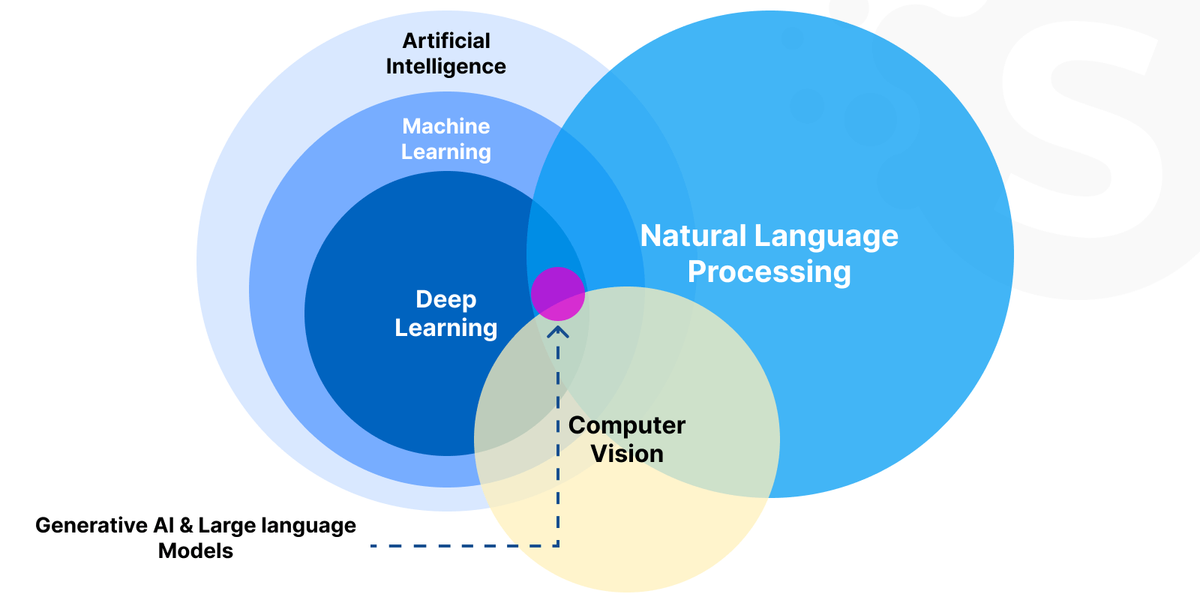
Both generative AI and LLMs represent significant advancements in the field of artificial intelligence. These technologies share a common foundation in AI and data-driven content generation. They also learn from large datasets to perform their respective functions. Both can generate new content, albeit in different forms. Yet, generative AI vs large language models have distinct capabilities and implications for technology development. Let's take a look:
| Aspect | Generative AI | LLMs |
|---|---|---|
| Core Function | Broad content creation (images, music, data, etc.) | Specialized in understanding and generating text |
| Primary Use Cases | Art, design, music production, synthetic data | Text translation, content writing, chatbots |
| Data Handling | Diverse data types (visual, auditory, etc.) | Primarily text data |
| Learning Process | Learns patterns/styles in various data types | Learns language patterns, grammar, idioms |
| Output | Varied (images, sounds, data patterns) | Text-based (articles, translations, conversations) |
| Interactivity | Varies by application (some interactive, some not) | Highly interactive, especially in chatbots |
| Customization | Customizable outputs in art, design, etc. | Customizable language outputs, style mimicry |
| Impact on Industries | Broad impact across creative industries | Significant impact on communication, education, etc. |
| Technological Advancements | Innovations in creative and design processes | Advancements in natural language understanding |
| Ethical Considerations | Authorship, originality, data privacy | Data privacy, content authenticity, bias |
The further development of generative AI and LLMs causes significant changes in technology:
Innovation. Generative AI pushes the boundaries in creative fields; it opens new avenues for artistic and design endeavors. LLMs are revolutionizing the way we interact with information and automate language-based tasks.
Efficiency and Productivity. Generative AI and LLM technologies enhance efficiency:
- Generative AI automates and optimizes creative processes;
- LLMs streamline communication and documentation tasks.
Ethical and Practical Implications. As these technologies advance, they raise important questions about ethics and data privacy. We continue to examine their potential impact on employment in the creative and writing professions.
Customization and Personalization. Technologies enable more personalized experiences in various sectors. LLMs and generative AI in e-commerce offer custom marketing and product recommendations.

Project Calculator
Get the detailed project estatimation – choose the details of your product and calculate the quote of the development
Calculate nowApplications in Technology and Business
Generative AI and LLM technologies demonstrate practical and valuable applications. Businesses and industries can use them to improve their products, services, and experiences. Here are some use cases of generative AI vs LLM in technology and business:
- Integrated Marketing Campaigns. Companies use generative AI's capabilities in creating visual content with LLMs' proficiency in text generation. For example, a business might use generative AI to design appealing marketing materials. LLM can help make compelling ad copy, resulting in cohesive marketing campaigns.
- Enhanced Customer Support. Generative AI can be used to understand and predict customer behavior. Meanwhile, LLMs handle the actual interaction, offering personalized responses. This combination can significantly improve customer satisfaction and efficiency.
- Product Development and Feedback Analysis. LLMs can analyze customer feedback, extracting valuable user preferences and experience insights. Generative AI can then use these insights to simulate and visualize new product designs or improvements. This way, businesses enable a data-driven approach to product development.
- Content Strategy Optimization. As mentioned before, LLMs can be used for generating written content like blog posts or social media updates. Generative AI assists in creating corresponding visual content. This combination ensures a unified content strategy that resonates with the target audience.
- Interactive Training and E-Learning. In corporate training and e-learning, LLMs are used to create interactive, text-based training modules. Generative AI complements this by providing realistic simulations and visual aids.
- Financial Analysis and Forecasting. Companies use LLMs to process and interpret financial documents and reports. Generative AI in banking can model financial scenarios and predict market trends, aiding in strategy planning.
$76.8 billion by 2030
The generative AI market will reach $76.8 billion by 2030, whereas the LLM market may be valued at $40.8 billion by 2029.
Future Trends in AI
The applications of Generative AI and LLMs in technology and business are vast and varied. These trends indicate even more integration and innovation in the discussed areas.
- Increased Personalization. Both technologies can offer more personalized user experiences in products and services. They can tailor content and interactions to individual preferences.
- Enhanced Creativity and Design. The future will likely see more sophisticated use of generative AI, further pushing the boundaries of art, music, and design.
- Automation and Efficiency. As these technologies mature, they will automate more complex tasks. Thus, generative AI and LLM can increase efficiency in industries from manufacturing to finance.
- Ethical AI and Regulation. The growing impact of AI will bring more focus on ethical AI practices and regulatory frameworks to ensure responsible use.
- Collaborative AI. The trend toward human-AI collaboration will intensify. Generative AI and LLM technologies may augment human skills, enabling new forms of teamwork.
- Expanding Accessibility. AI will continue to break barriers in accessibility as it can provide solutions for people with different abilities.
Conclusion
Generative AI vs LLM represents two cutting-edge and revolutionary technologies within artificial intelligence. They can generate original content, spanning text, images, and code generation, driven by specific input or data. While they share similarities and differences, generative AI and LLMs can synergize in their applications. Their versatility extends across diverse domains, producing innovative and beneficial outputs.
Understanding their applications, benefits, and potential challenges is crucial for companies seeking to leverage these advanced AI technologies. Navigating the AI landscape requires expertise, strategic planning, and a forward-thinking approach.
If your company wants to harness the power of Generative AI and LLMs to enhance your operations and offerings, we invite you to connect with Softermii. Our seasoned experts can provide insights, strategies, and solutions tailored to your business goals.
Drop us a line to explore how AI can keep you ahead in the dynamic world of technology.
Stay ahead in the competitive landscape and achieve unprecedented success with Softermii by your side.
Frequently Asked Questions
How is Generative AI impacting software development?
Generative AI impacts software development in various ways – for example, automating and optimizing various aspects of software development, like code generation and testing. It can improve software developers' efficiency and productivity, enabling them to create more innovative and customized software applications and features.
What future developments can we expect in Generative AI and LLMs?
Future developments in Generative AI and LLMs are anticipated to focus on:
We can expect advancements in the integration of these technologies into everyday applications. Generative AI and LLMs can make interactions more natural and human-like. Also, significant progress will likely be made in addressing ethical concerns like bias and privacy.
What are the limitations of Generative AI vs Large Language Models?
Generative AI and LLMs, while powerful, aren't flawless and face several challenges. These concerns include potential compromises to data and user privacy, effects on content credibility, and questions about content ownership and rights. Whether positive or negative, societal and environmental impacts need careful consideration.
How can product developers use Generative AI and LLMs to create innovative and customized products?
Product developers can leverage Generative AI and LLMs to craft innovative, customized offerings. Employing these technologies to generate content can enhance and personalize product features, functions, and designs.
For instance, Generative AI can create distinctive product images like logos or graphics, reflecting product identity and attracting the target audience. LLMs can generate engaging product texts, including names, slogans, or descriptions, effectively conveying product value and benefits to potential customers.
How about to rate this article?
0 ratings • Avg 0 / 5 · Thanks for rating!
Written by:

Co-Founder
Andrii Horiachko is a Co-Founder of Softermii with over 12 years of experience in software development, eight of them spent building and managing Softermii itself. He is responsible for technology-innovation in clients’ projects, making sure every product runs on a modern, carefully chosen tech stack that can sustai…