
Want to know more? — Subscribe
NLP and LLM are two important technologies used to analyze and generate human language at scale. As they become more common, it's useful to understand the…
NLP and LLM are two important technologies used to analyze and generate human language at scale. As they become more common, it's useful to understand the difference between NLP and LLM.
NLP refers to a family of algorithms used to understand, manipulate, and generate human language. It has been continuously developed since the 1950s to analyze relationships in text. It uses techniques like part-of-speech tagging, named entity recognition, sentiment analysis, etc.
In contrast, LLMs like ChatGPT from OpenAI are systems trained on vast amounts of text using deep learning. They can produce human-like text but lack a deeper understanding of language. LLMs generate language rather than analyze it like traditional NLP.
Softermii aims to provide a concise yet informative comparison of NLP vs LLMs. This article covers the technologies, use cases, and challenges of these technologies; we offer comparative analysis and discuss their synergistic potential.
Without further ado, let's explore how NLP vs LLM areas of capability overlap and contrast.
Want a skimmable version?
Get a quick overview of our article with AI to access all the important information quickly.
Generate AI SummaryHide summary
Want a skimmable version?
Get a quick overview of our article with AI to access all the important information quickly.
Generate AI SummaryHide summaryA detailed comparison of NLP vs LLM — what each is, the key NLP technologies, and the challenges of both.
Understanding NLP
NLP technology lies at the intersection of computer science, AI, and linguistics. It enables machines to interpret and respond to human language in a valuable way. Its applications range from spell-checking and auto-correction to chatbots and voice assistants.
At its core, NLP involves the development of algorithms designed to generate human language in all its forms. This technology breaks down the barriers between computers and human language. Thus, it opens new avenues for data analysis and insight generation in many industries.
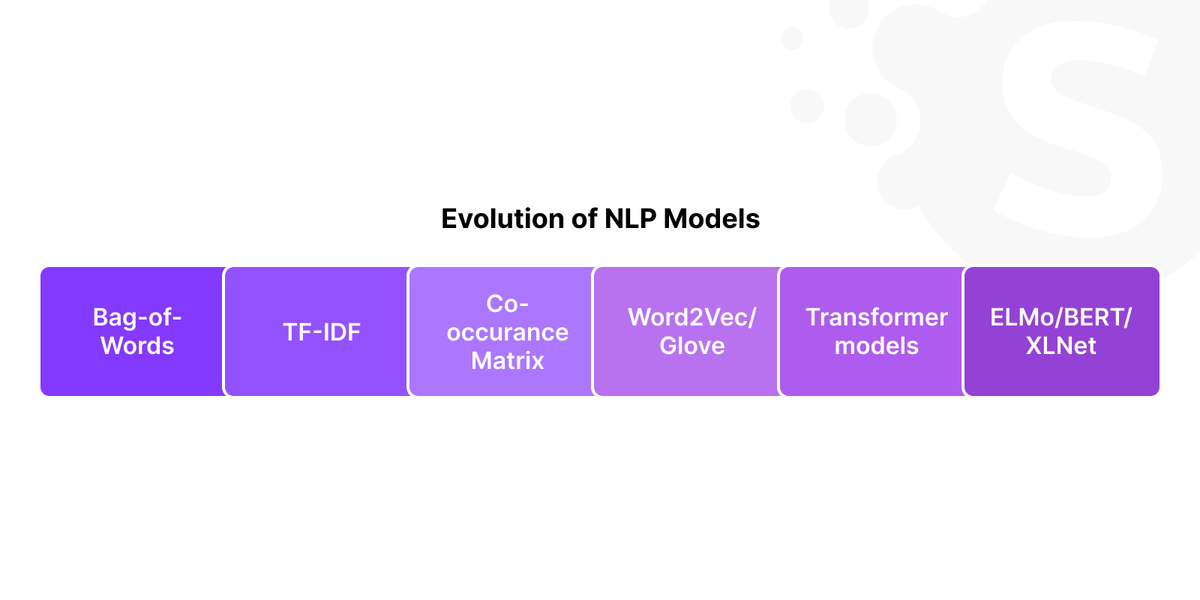
Key Technologies in NLP: Parsing, Semantic Analysis, and More
Several processes are integral to the functionality of Natural Language Processing. Computers can process and generate human language in different applications:
- Parsing. It breaks down a sentence into its grammatical components. Thus, it becomes easier for machines to understand the structure of language. Parsing helps identify parts of speech, sentence boundaries, and syntactic relationships.
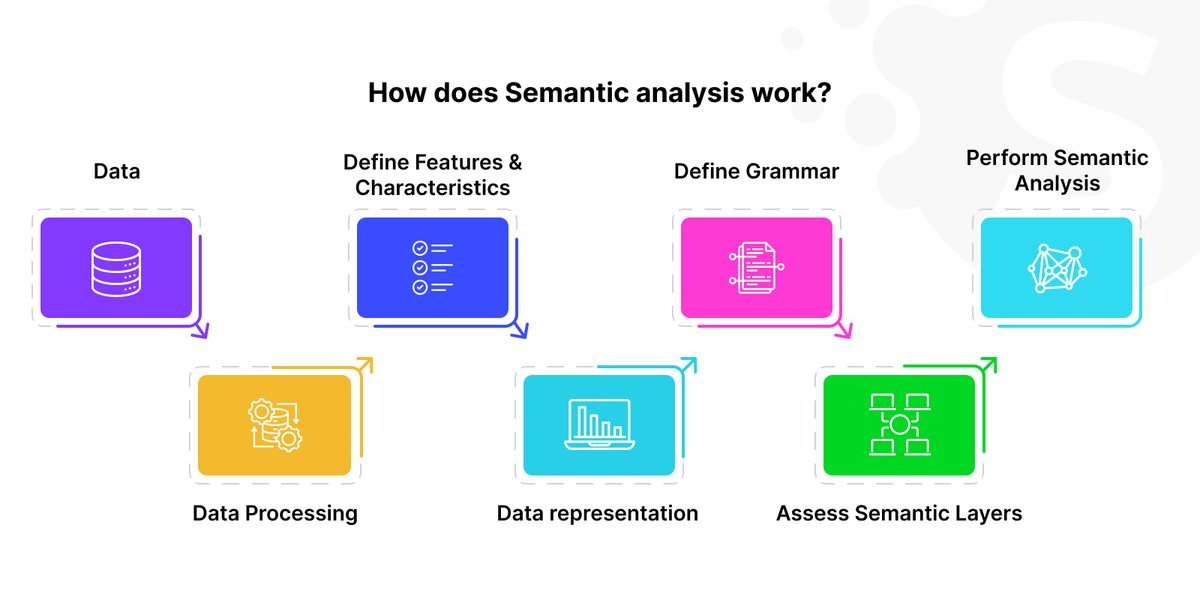
- Semantic Analysis. Goes beyond mere word recognition to understand the meanings and relationships between words. Semantic analysis is crucial for understanding text context, idioms, and even humor.
- Speech Recognition. Converts spoken language into text. This technology assists in transcribing audio into readable formats.
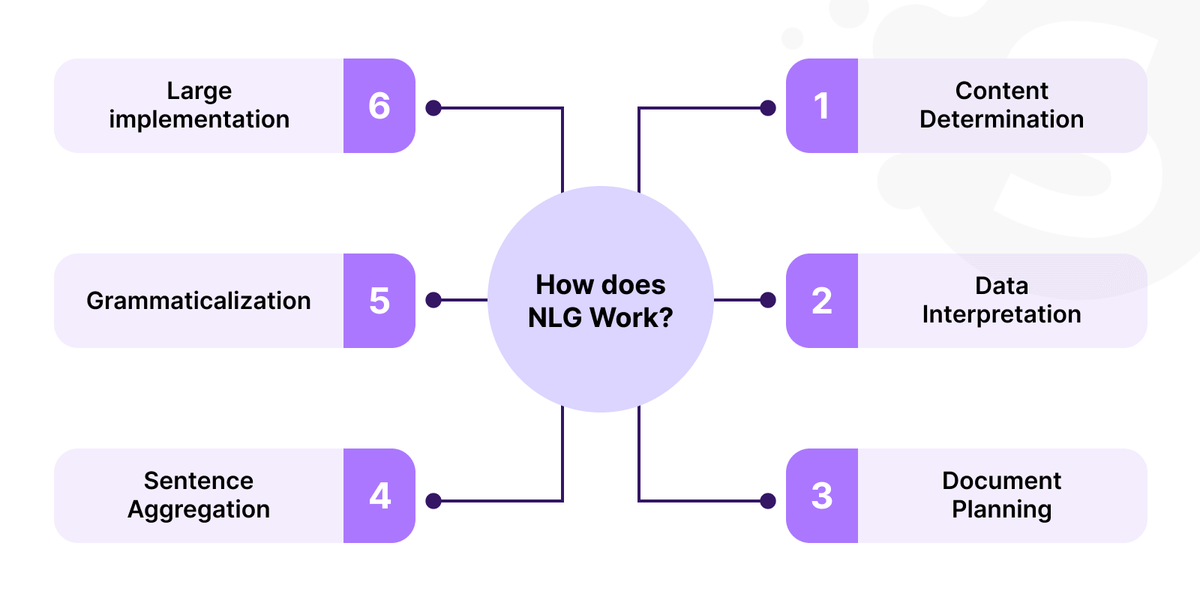
- Natural Language Generation (NLG). Unlike speech recognition, NLG involves creating human-like text from computer data. This technology is used in report generation, summarization, and message composing.
- Sentiment Analysis. Used widely in social media monitoring and brand reputation management. This technology assesses the emotional tone behind a body of text. It helps in understanding customer opinions, feedback, and market trends.
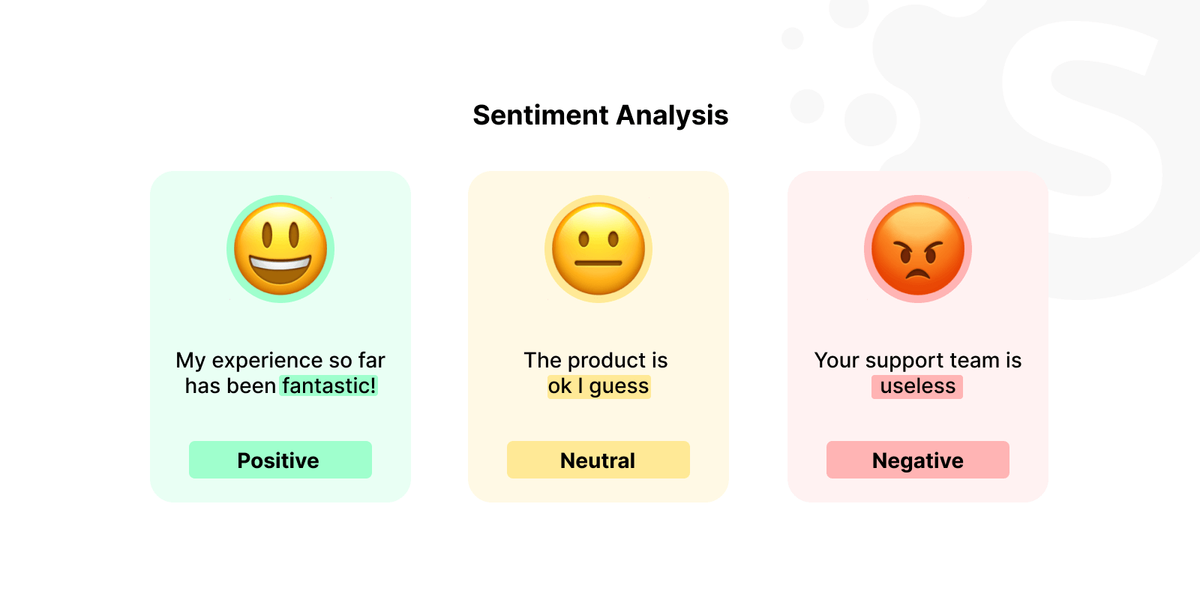
- Machine Translation. Enables the automatic translation of text or speech from one language to another. It's crucial in global communication and information dissemination across languages.
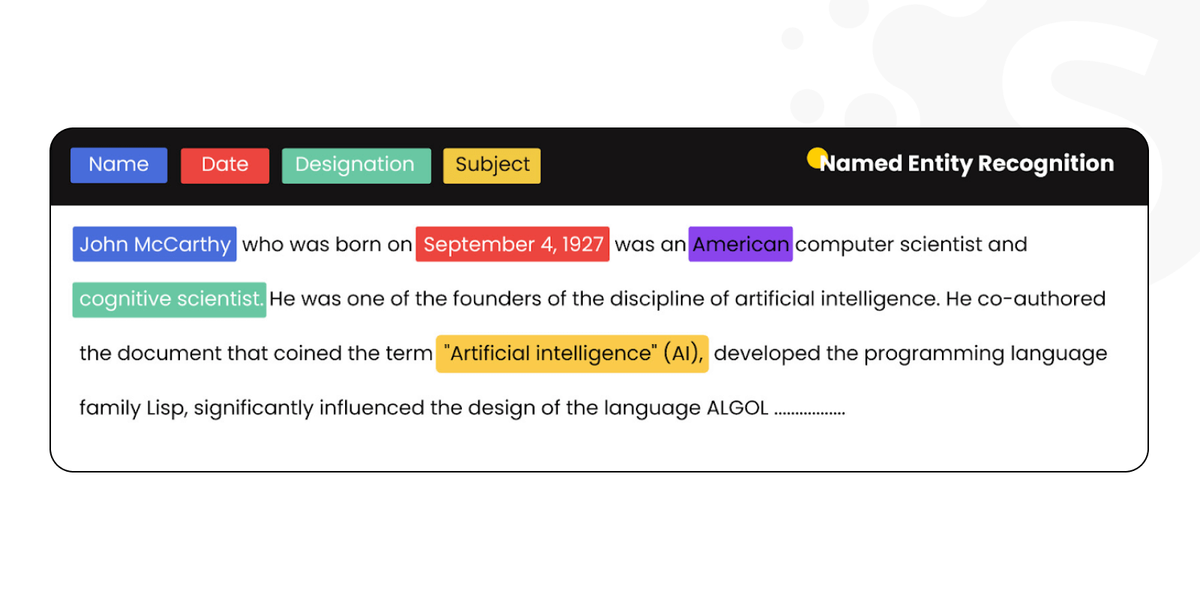
- Named Entity Recognition (NER). Identifies and categorizes key information in text, like names of people, places, and organizations.
- Text Classification and Categorization. Involves assigning labels to a text, making it easier to manage and sort large volumes of data. It can be particularly useful in organizing documents, emails, and web content.
Applications of NLP: From Text Analytics to Speech Recognition
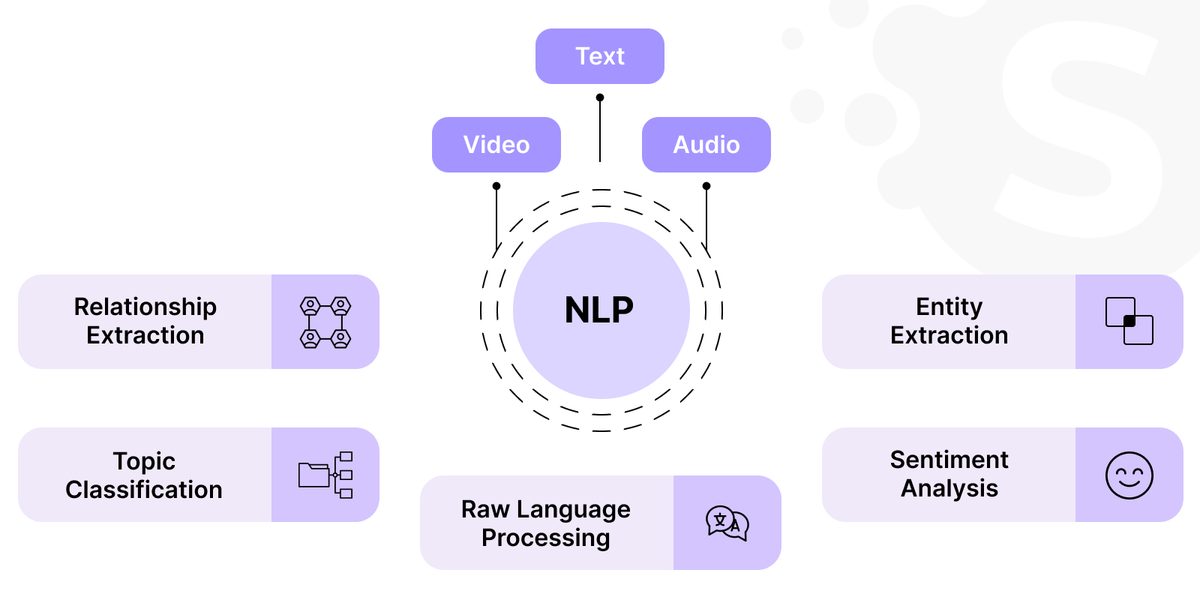
The applications of NLP are vast and varied, impacting different sectors and industries. Let's take a look:
- Text Analytics. It enables the analysis of vast volumes of text data to extract meaningful insights. This method can be useful in market research, customer feedback analysis, and social media monitoring.
- Speech Recognition. Voice-enabled devices and apps use NLP to understand and respond to spoken commands. For instance, this is the main feature of virtual assistants and dictation software. With chatbots and NLP, businesses can enhance customer service in many areas.
- Sentiment Analysis. NLP allows for analyzing the emotional tone in text data. It is often pivotal in gauging public opinion, brand monitoring, and market research.
- Machine Translation. Facilitates the translation of text or speech from one language to another. Thus, it breaks down language barriers in global communication.
- Content Recommendation. NLP algorithms can analyze user preferences and content attributes. They suggest personalized content in streaming services, online shopping, and beyond.

Project Calculator
Get the detailed project estatimation – choose the details of your product and calculate the quote of the development
Calculate nowChallenges and Limitations in NLP: Addressing the Shortcomings
Despite its advancements, NLP faces several limitations. By overcoming them, NLP can achieve more accurate and human-like language processing. It can further its integration into everyday technology and applications.
- Contextual Understanding. One of the biggest challenges is understanding the subtleties of language. Misinterpreting sarcasm or idiomatic expressions may lead to communication breakdowns.
- Language Diversity. The vast number of languages and dialects with unique grammatical and syntactical rules is another limitation of NLP.
- Ambiguity in Language. Human language is often ambiguous; it can be interpreted in multiple ways. It may be difficult for NLP systems to determine the correct meaning.
- Data Quality and Availability. The effectiveness of NLP systems relies on the quality and quantity of the training data. Biases in data often lead to skewed or inaccurate outcomes.
- Computational Resources. Advanced applications need significant computational power and resources. This can be a limiting factor in their development and deployment.
- Real-Time Processing. Some programs must process and respond to language inputs in real time. It may present a technological challenge for simultaneous translation and real-time customer service.
Delving into LLMs
Traditional NLP systems focus on specific language tasks. Meanwhile, LLMs perform a range of language tasks with remarkable fluency and versatility using their extensive tech stack for generative AI:
- generate coherent and contextually relevant text;
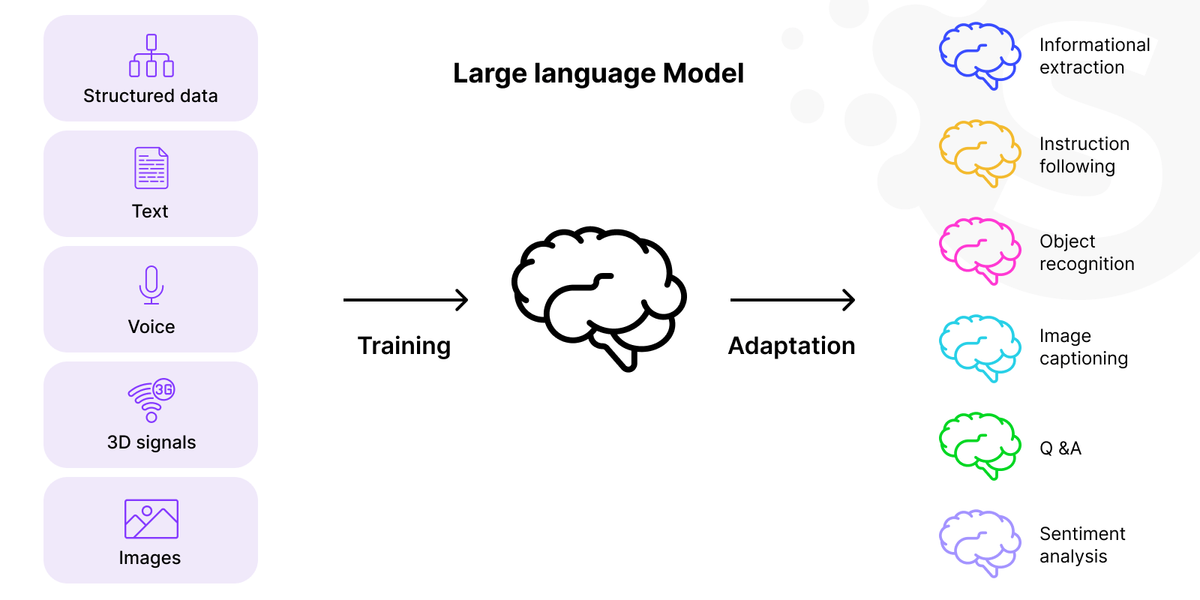
- engage in conversations;
- answer question;
- create content indistinguishable from human writing.
LLMs stand out due to their vast scale and advanced human language comprehension. Here are unique characteristics that distinguish LLMs:
Extensive Training Data. Enormous LLM datasets encompass a wide variety of text sources. This training enables them to generate various language styles and formats.
Adaptability. LLMs can perform different language tasks without task-specific training. They are invaluable for applications like fine-tuning automated content generation or sophisticated chatbots.
Contextual Understanding. Unlike simpler models, LLMs can understand and create contextually relevant text. This feature allows for maintaining coherence over longer spans of text.
Continual Learning. LLMs can refine and improve their language capabilities when exposed to more data. Ongoing training and user interactions help them adapt to new slang and terminologies.
Core Technologies Behind LLM: Deep Learning and Neural Networks
Like any other program, the power of Large Language Models is derived from their underlying technologies. As a result, they gain the capability to manage intricate language tasks with a new level of sophistication.
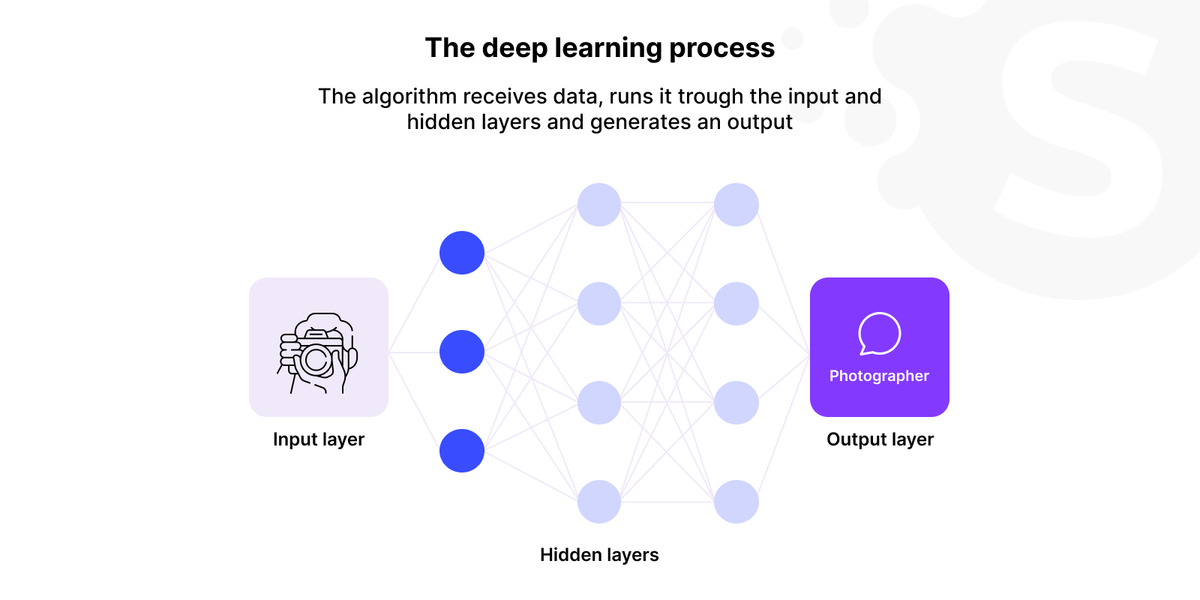
- Deep Learning. At the heart of LLMs lies a subset of machine learning technology that uses neural networks with many layers. These networks can learn and make intelligent decisions on their own.
- Transformers Architecture. Many LLMs use a transformer model, well-suited for processing data sequences. They enable the model to predict the next word in a sentence accurately.
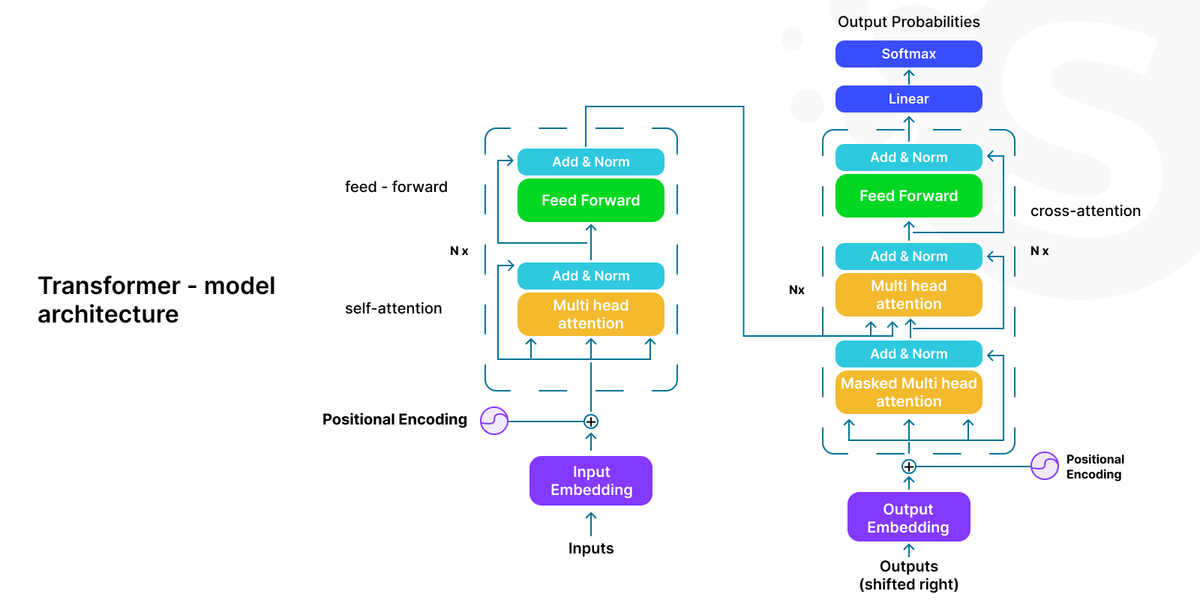
- Self-Attention Mechanisms. The model weighs the importance of different words in a sentence. This feature helps in understanding context and generating relevant responses.
- Scalability. LLMs can be trained with increasing data to enhance their performance and capabilities.
LLM in Action: Use Cases and Applications
The applications of Large Language Models are diverse and impactful across various fields:
- Content Creation. LLMs can generate articles, reports, and creative works like poetry and fiction.
- Customer Service. Automated responses and chatbots can handle customer queries, providing quick and relevant responses. Automated responses and chatbots can handle customer queries, providing quick and relevant responses. For instance, developing the ChatGPT plugin can enhance the user experience in service-oriented sectors.
- Language Translation. LLMs have a deep understanding of language nuances. They can offer sophisticated translation services, bridging communication gaps in global interactions.
- Educational Tools. LLMs assist in tutoring and creating personalized learning materials. These models can grade assignments and help in research by summarizing large volumes of text. They can explain complex concepts and generate hypotheses and research material.
- Healthcare. LLMs aid in managing information, interacting with patients, and analyzing medical documentation.
$18.9 billion
The forecast indicates that the global NLP market, with a size of $18.9 billion in 2023 , is expected to reach $68.1 billion by 2028, at a CAGR of 29.3% over the forecast period
Limitations and Ethical Considerations in LLM: A Critical Look
Despite their capabilities, LLMs also come with limitations and ethical challenges. Addressing them is crucial for the responsible development and deployment of LLM models. Companies must balance technological advancements with considerations for fairness, transparency, and societal impact.
- Bias and Fairness. Since LLMs are trained on existing data, they can perpetuate biases present in that data. It may raise concerns about fairness and representation in AI-generated content.
- Accuracy and Reliability. Sometimes, LLM outputs can be based on patterns in data rather than factual accuracy. Thus, they may produce inaccurate or nonsensical responses.
- Lack of Understanding. While LLMs can mimic understanding, they lack true comprehension. In complex situations, it may lead to errors or inappropriate reactions.
- Data Privacy. LLMs process large amounts of data, including potentially sensitive information. This use of personal data emphasizes the need for strict data governance practices.
- Energy Consumption. The training and operation of LLMs require significant computational resources. This process raises questions about environmental impact and resource allocation.
Comparative Analysis: NLP vs LLM
Both NLP and LLM are integral components of modern artificial intelligence. They do share common goals in facilitating human-computer interaction through language. Yet, NLP vs LLMs also differ in their approaches, capabilities, and applications. Our analysis highlights these differences, focusing on their performance, scalability, and accuracy.
| NLP | LLM | |
|---|---|---|
| Performance Metrics | High accuracy in specialized tasks like syntax parsing and entity recognition. | Excels in generating human-like text and handling a broad range of language tasks. |
| Scalability and Efficiency | More efficient in handling specific tasks; requires less computational power. | Highly scalable, capable of handling diverse tasks; requires more computational resources. |
| Accuracy and Reliability | Highly accurate and reliable within their specialized domains; may struggle with context-rich tasks. | Reliable in coherent language generation; but can produce inaccurate/biased content depending on training data. |
| Usability in Healthcare | Used for processing medical records, extracting patient information, and predictive diagnostics. | Assists in patient interaction, information dissemination, and providing general medical advice. |
| Usability in Finance | Employed for sentiment analysis, risk assessment, and customer service. Specialized in financial language processing interactions through generative AI in banking. | Applicable for generating financial reports, market analysis, and automating customer interactions. |
| Usability in E-commerce | Enhances customer experience through chatbots, personalized recommendations, and feedback analysis. | Contributes to content creation, large-scale customer interactions, and digital marketing automation. |
Integration and Synergy
We can create more robust and versatile language processing systems when combining NLP vs LLMs. This integration aims to harness NLP's specialized capabilities and LLM's broad contextual understanding. Its implications across industries can enhance the efficiency and effectiveness of AI applications.
Combining NLP and LLM: Synergistic Potential
First, let's examine what a combination of NLP and LLM technologies can offer.
- Enhanced Accuracy and Contextual Understanding. Companies can integrate NLP's focused processing with LLM's broad contextual awareness. Thus, systems achieve higher accuracy and relevance in language tasks.
- Resource Optimization. NLP's efficiency in processing can complement the resource-intensive nature of LLMs. It leads to more scalable solutions and optimized resource allocation.
- Flexibility and Adaptability. This integration allows for greater flexibility and adaptability in AI applications.
Case Studies: Successful Integrations in Real-World Scenarios
The integration of NLP and LLM promises more powerful and contextually aware systems. This synergy opens new possibilities and transforms the AI application in various sectors. Several real-world examples demonstrate the successful integration of NLP and LLM:
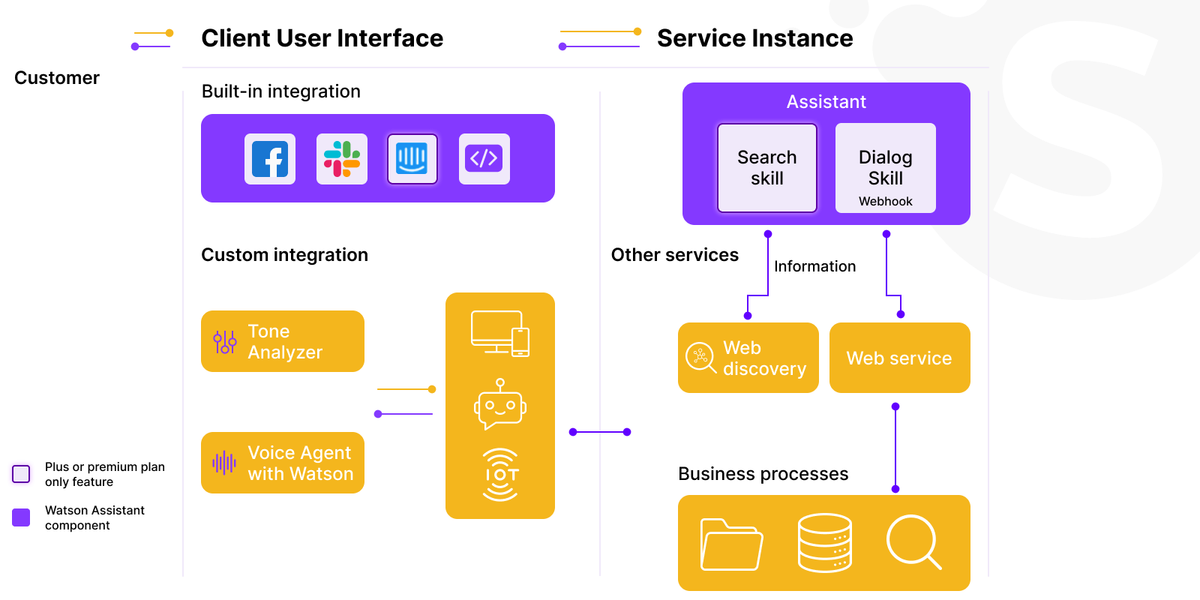
Healthcare. IBM's Watson combines NLP and LLM to analyze medical data. It interprets patient data and medical literature, using NLP for specific information extraction and LLM for broader context and pattern recognition. Thus, it can provide insights for diagnosis and treatment plans.
Finance. Bloomberg and Johns Hopkins University developed BloombergGPT. This is a 50-billion parameter language model trained on a 700-billion token dataset. It can achieve the best results across a wide range of financial tasks, including the following:
- scaling up research;
- extracting valuable information;
- aligning decision-making processes;
- identifying biases;
- managing risks.
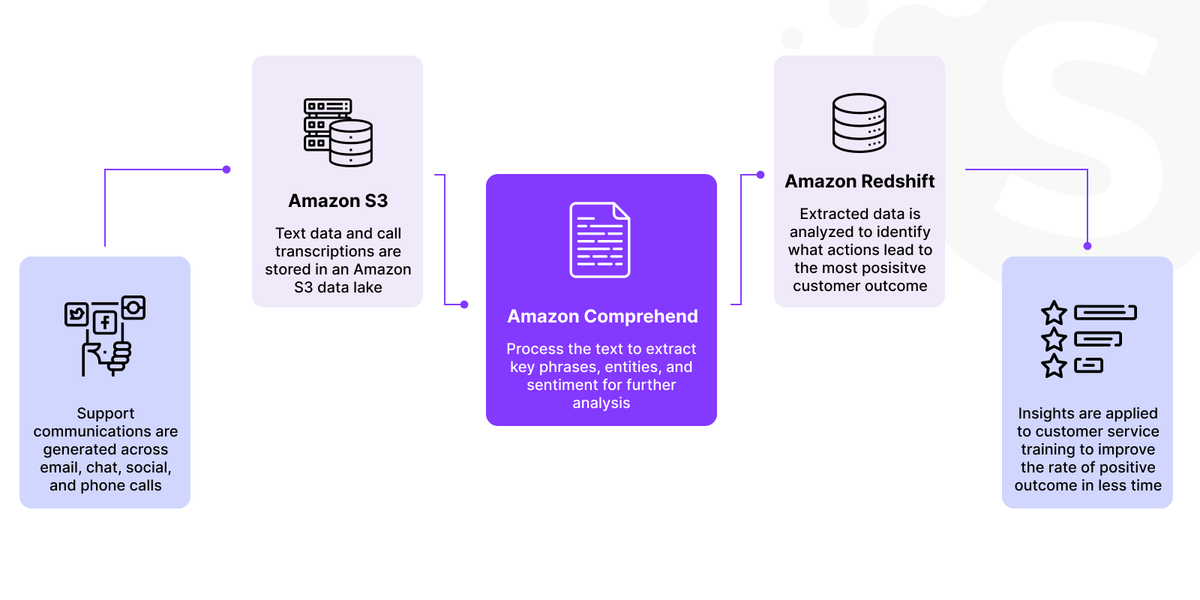
E-commerce. Amazon Comprehend can analyze and understand customer interactions, reviews, and support requests. This information allows businesses to gain deeper insights into customer behavior and preferences. They can enhance product search and recommendations and improve customer support and satisfaction.
Future Trends: Predicting the Convergence of NLP vs LLM
The synergy between NLP and LLM will likely open new possibilities and applications. This collaboration can influence our interactions with AI, benefiting our lives.
Enhanced AI Assistants. The integration may lead to more advanced and contextually aware AI assistants. They will be capable of understanding and responding to complex human interactions.
Innovations in Automated Content Creation. We can expect more sophisticated tools for content creation across various formats. They will blend NLP's linguistic rules with LLM's creative capabilities.
Improved Language Understanding in Robotics. This synergy could enhance language processing capabilities in robotics. It leads to more natural and effective human-robot interactions.
In Summary
While NLP and LLMs both deal with human language, they differ in their approaches. NLP focuses on algorithmic modeling of language for specific tasks. It excels at well-defined tasks like translation and information extraction through tailored models. At the same time, LLMs use massive pre-training for broad capabilities but less fine-grained control. LLMs demonstrate impressive open-domain abilities but lack full language comprehension. These fields overlap and complement each other, with new techniques combining their strengths. Yet, NLP and LLMs can also pose risks if not responsibly developed and applied.
Looking ahead, the trajectory of Natural Language Processing vs LLM points towards more nuanced AI interactions, deeper integration into various industries, and continual improvements in AI ethics and technology.
Focusing on responsible development will be crucial as language models continue to advance. Staying informed about their progress can help organizations design effective and ethical applications. For those intrigued by the possibilities of NLP and LLM in your projects, Softermii stands ready to assist. Contact us to explore how these technologies can be tailored to your needs, ushering in a new era of AI-driven solutions.
Use all the benefits provided by NLP or LLM to your business by implementing these newest technologies to your solutions
Frequently Asked Questions
What makes Large Language Models unique, and what are their core technologies?
LLMs stand out due to their extensive training data, adaptability, and contextual understanding. Their core technologies include:
They enable LLMs to process language sequences and predict text with high accuracy.
How do NLP vs LLMs differ in terms of scalability and efficiency?
NLP systems are more lightweight and efficient for real-time processing. LLMs, due to their larger size, require significant computational resources. Yet, they often bring beneficial impacts to model scalability and operational efficiency.
What challenges do NLP and LLM face in terms of accuracy and reliability?
NLP systems can struggle with understanding context and nuances in language. LLMs, although contextually aware, can sometimes produce unpredictable or inaccurate outputs. It happens due to their reliance on pattern recognition in large datasets.
What ethical considerations are associated with the use of NLP vs Large Language Model?
Ethical concerns often include:
How about to rate this article?
0 ratings • Avg 0 / 5 · Thanks for rating!
Written by:

Co-Founder
Andrii Horiachko is a Co-Founder of Softermii with over 12 years of experience in software development, eight of them spent building and managing Softermii itself. He is responsible for technology-innovation in clients’ projects, making sure every product runs on a modern, carefully chosen tech stack that can sustai…