
AI in Logistics and Transportation: Ultimate Guide with Bonus Tips

Want to know more? — Subscribe
Artificial intelligence is speeding up change in logistics and transportation at an unprecedented pace. The global AI in logistics market was valued at about…
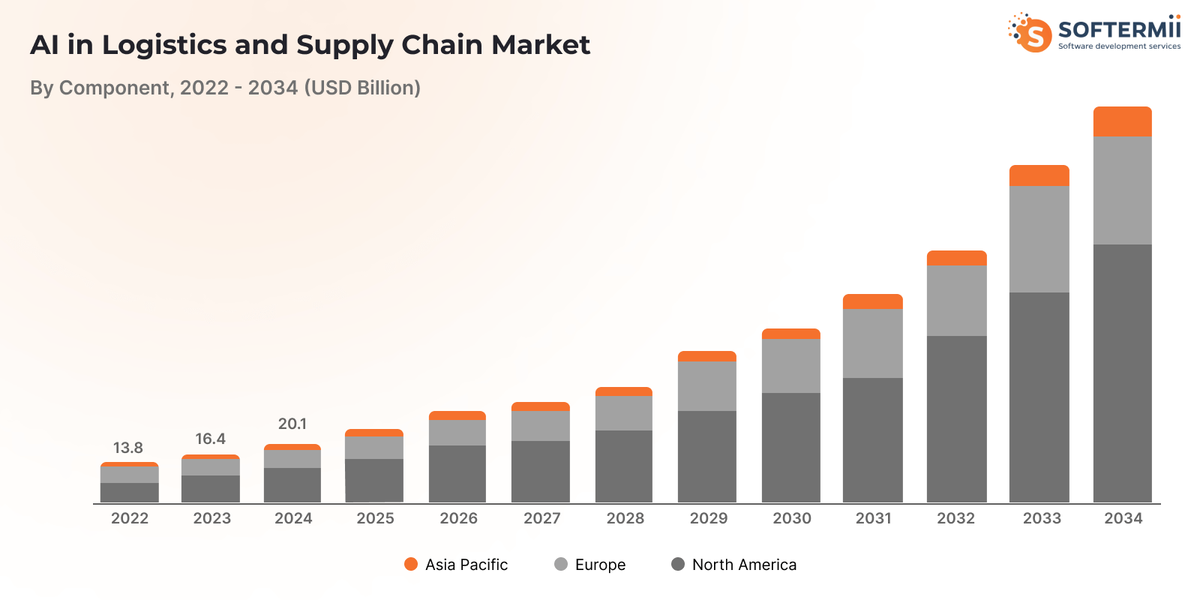
Artificial intelligence is speeding up change in logistics and transportation at an unprecedented pace. The global AI in logistics market was valued at about $20.1 billion in 2024. It is projected to grow to $196.58 billion by 2034, with a compound annual growth rate of 25.9%.
Companies worldwide have already adopted AI technologies to improve efficiency, lower costs, and meet growing customer demands. Predictive analytics and autonomous vehicles are becoming essential for optimizing supply chains and delivery networks.
Our comprehensive guide delves into the practical applications of artificial intelligence in the logistics industry. It covers key trends, actionable tips, and real-world examples to help businesses leverage AI for a competitive advantage.
Want a skimmable version?
Get a quick overview of our article with AI to access all the important information quickly.
Generate AI SummaryHide summary
Want a skimmable version?
Get a quick overview of our article with AI to access all the important information quickly.
Generate AI SummaryHide summaryA practical guide to AI in logistics and transportation — the benefits, the adoption gap, and the challenges of scaling beyond pilots.
AI’s Impact on Logistics
The impact on operations is clear. McKinsey reports that AI-powered supply chain management can:
- Cut logistics costs by up to 20%
- Reduce inventory levels by 20-30%
- Increase warehouse capacity by up to 15%
Significant improvements are happening across key logistics areas. Smarter route planning reduces fuel use and cuts delivery times. Automated warehouses optimize inventory placement and speed up order picking. Advanced data analysis helps manage risks, avoid delays, and maintain proper stock levels.
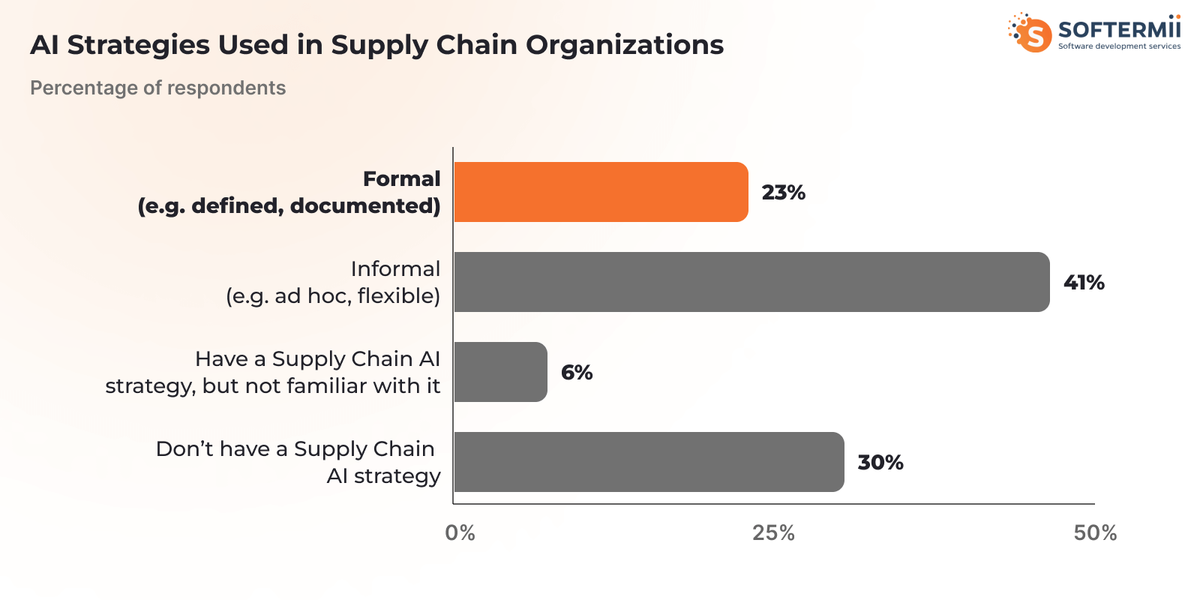
Despite the clear benefits, the adoption of AI in logistics is still in its early stages. Only 23% of logistics companies have a formal AI strategy in place, while another 41% operate with an informal approach. However, with 30% yet to develop any AI strategy, it's clear that AI tools are set to become a standard part of logistics operations, rather than just a competitive advantage.
Benefits of AI in Logistics and Transportation
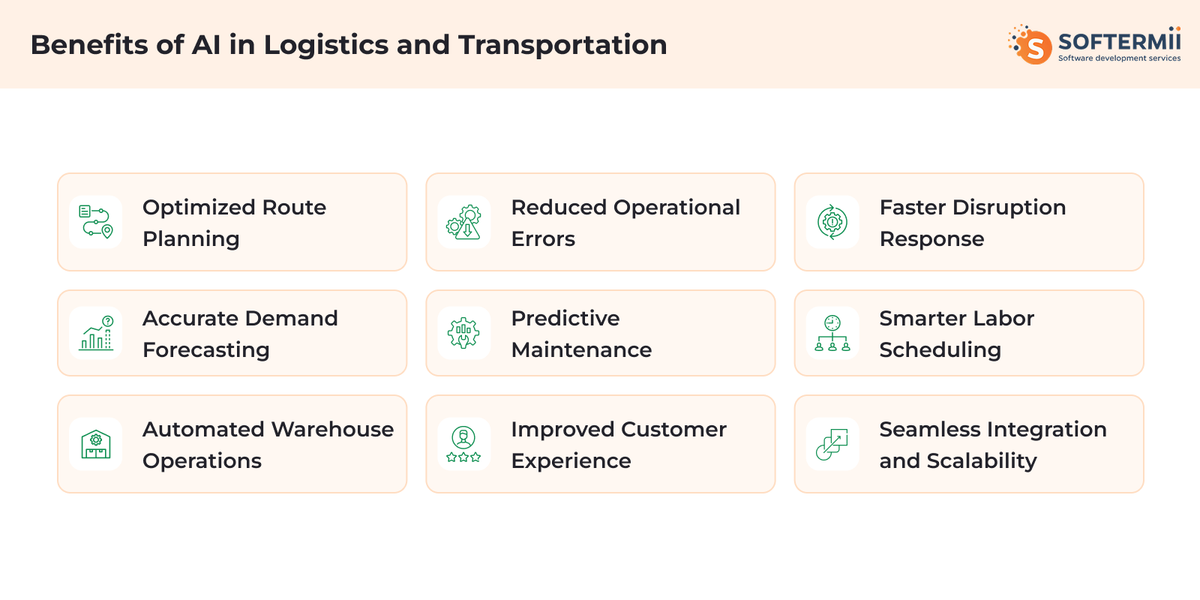
Companies using AI report real improvements in cost control, speed, and service quality. Here’s how AI is making a difference across the industry:
Optimized Route Planning
AI examines real-time data like traffic, weather, vehicle capacity, and delivery schedules to design efficient routes. It cuts average travel time by 10%, reduces fuel consumption, lowers vehicle wear, cuts costs, and minimizes delays. It also helps lower emissions and avoid congested or unsafe roads.
Accurate Demand Forecasting
Traditional methods often miss signals beyond past sales data. AI software considers market trends, social sentiment, economic factors, and seasonal changes. It improves forecast accuracy and reduces errors up to 30%. This helps companies keep the right inventory levels, reduce carrying costs, and meet customer demand smoothly.
Automated Warehouse Operations
Using robotics, computer vision, and machine learning, AI speeds up sorting, picking, and packing. It also optimizes warehouse layouts for quicker processing. Automation leads to cost savings, fewer errors, and better handling of peak volumes. It also reduces strain on workers, creating safer workplaces.
Reduced Operational Errors
Manual processes can cause mistakes in inventory tracking, scheduling, and paperwork. Artificial intelligence tools automate these tasks, monitor for issues, and significantly lower error rates. These benefits enhance supply chain reliability, reduce costly delays, and strengthen collaboration with suppliers and customers.
Predictive Maintenance
Equipment failures disrupt logistics and transportation operations. AI uses sensor data to detect early signs of mechanical issues. Companies can schedule maintenance before breakdowns occur. This approach extends asset life, lowers repair costs, and keeps operations running smoothly.
Improved Customer Experience
AI powers real-time shipment tracking and proactive updates. Customers gain clear visibility into their deliveries. Notifications about delays and status changes build trust and satisfaction. AI chatbots handle routine inquiries, allowing human agents to focus on more complex issues.
Faster Disruption Response
Logistics networks face frequent disruptions from weather, traffic, and demand shifts. AI detects early warning signs, enabling quick rerouting and resource reallocation. This agility minimizes delays, maintains service quality, and improves overall supply chain resilience.
Smarter Labor Scheduling
AI analyzes workloads, employee skills, and shift patterns to create fair and efficient schedules. Productivity increases, overtime costs drop, and workforce satisfaction improves. AI also allows rapid adjustments when absenteeism or sudden demand changes occur.
Seamless Integration and Scalability
Modern AI tools integrate smoothly with existing logistics and transportation platforms, such as ERP and transportation management systems. Companies can begin with pilot projects to reduce risk and then scale solutions across operations.
We partner with logistics companies and supply chain startups. Drop us a line and let's explore your needs.
Challenges of AI in Logistics and Transportation
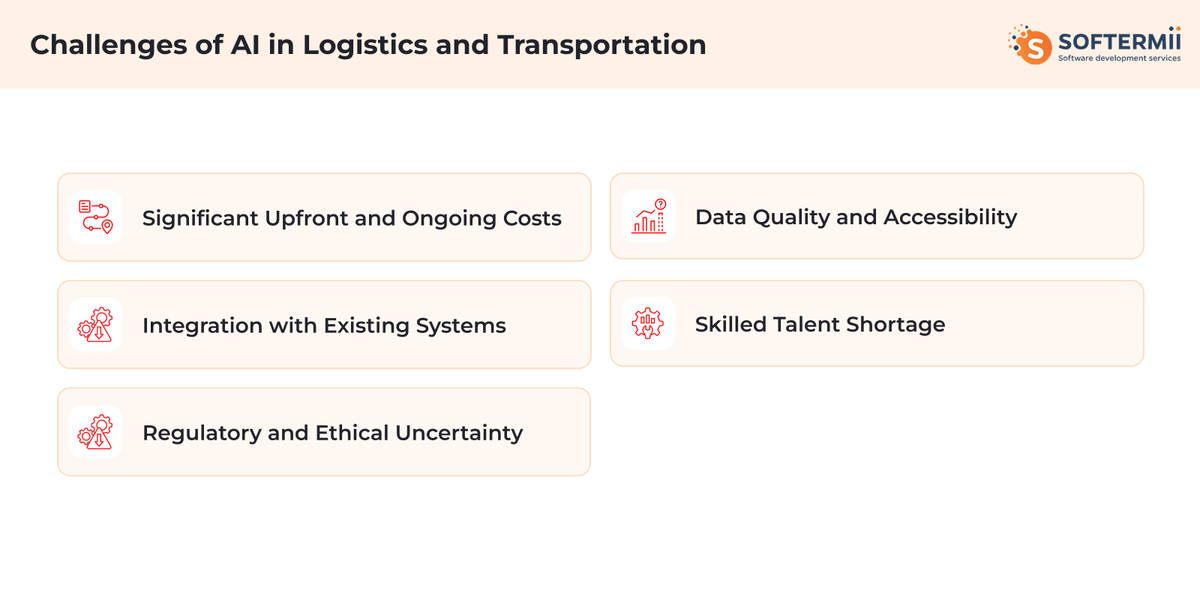
Adopting AI is rarely simple. Moving beyond pilot projects to full-scale implementation often reveals unexpected obstacles. These challenges affect budgets, talent strategies, data management, and customer trust.
Significant Upfront and Ongoing Costs
Implementing AI involves more than purchasing licenses. It demands investment in infrastructure, system integration, and continuous model updates. Companies can expect to pay around $50,000 for smaller projects and $500,000–$2.5 million for enterprise-level solutions.
Cloud platforms may reduce hardware expenses, but recurring costs like data storage, software maintenance, and hiring specialized staff can quickly add up.
Data Quality and Accessibility
AI depends on reliable, consistent data. Logistics data often arrives fragmented, incomplete, or in incompatible formats from multiple partners. Without standardized data collection and cleaning, AI models risk producing inaccurate or unreliable outputs. In fact, Gartner predicts that by 2026, 60% of AI projects will be abandoned due to poor-quality or insufficient data.
Integration with Existing Systems
Most legacy logistics platforms were not designed to handle AI workloads. Integrating new AI tools with older systems often requires custom development, migrating to cloud environments, or redesigning key processes. Each option carries technical risks and potential operational disruptions.
Skilled Talent Shortage
Effective AI in logistics demands expertise across machine learning, operations, and supply chain management. Demand for these skills exceeds supply. As a result, companies frequently encounter delays or higher costs when hiring, training, or retaining qualified personnel.
Regulatory and Ethical Uncertainty
Regulations around AI use, autonomous systems, and cross-border data handling remain in flux. Unclear or shifting rules create uncertainty for logistics companies, which can delay AI projects and increase compliance costs.
Navigating regulatory complexities requires ongoing attention and flexibility. Without clear guidelines, companies risk fines or operational disruptions.
Trends and Use Cases of AI in Logistics
Use of artificial intelligence is no longer confined to large enterprises. Today, AI tools are accessible through cloud platforms, modular systems, and specialized applications tailored for logistics operations. Several key trends highlight how AI is becoming an essential business asset.
Predictive Analytics for Demand and Supply Planning
AI forecasting models analyze past sales, seasonal shifts, market changes, and external factors. This allows companies to predict demand more accurately. Better forecasts lead to improved inventory alignment, fewer surpluses, and fewer stock shortages.
Dynamic Route Optimization
Real-time data from GPS, traffic updates, and weather reports feed AI algorithms that continuously adjust delivery routes. These adjustments reduce delays, cut fuel costs, and increase on-time delivery rates.
Warehouse Automation and Robotics
Autonomous robots use computer vision and machine learning to identify, pick, and transport items within warehouses. AI also optimizes storage layouts to reduce retrieval times and speed up order fulfillment.
Real-Time Shipment Tracking and Visibility
AI collects live data from carriers, sensors, and tracking devices to provide full visibility of goods in transit. This enables proactive alerts for delays, temperature fluctuations, or route deviations.
Risk Detection and Mitigation
Machine learning identifies patterns linked to equipment failures, supplier delays, or route disruptions. Collaborative AI-based risk management increases overall risk detection by about 45% compared to conventional siloed methods. Early detection helps companies prevent minor issues from becoming costly problems.
NLP for Customer Interactions
AI chatbots and voice assistants manage routine shipment questions, delivery scheduling, and status updates. This reduces the load on call centers and accelerates response times.
Sustainability and Emissions Optimization
Optimizing routes, consolidating shipments, and improving load efficiency help cut fuel use and carbon emissions. These actions assist logistics companies in meeting environmental targets.
Fraud Detection in Freight and Payments
AI models detect unusual patterns in freight documentation, payments, and shipment records. This lowers the risk of fraud and financial loss.
Real-Life Examples
Several companies are redefining logistics by addressing specific industry challenges. Together, they demonstrate how innovation makes logistics smarter, greener, and more adaptable to market demands.
ClickShip
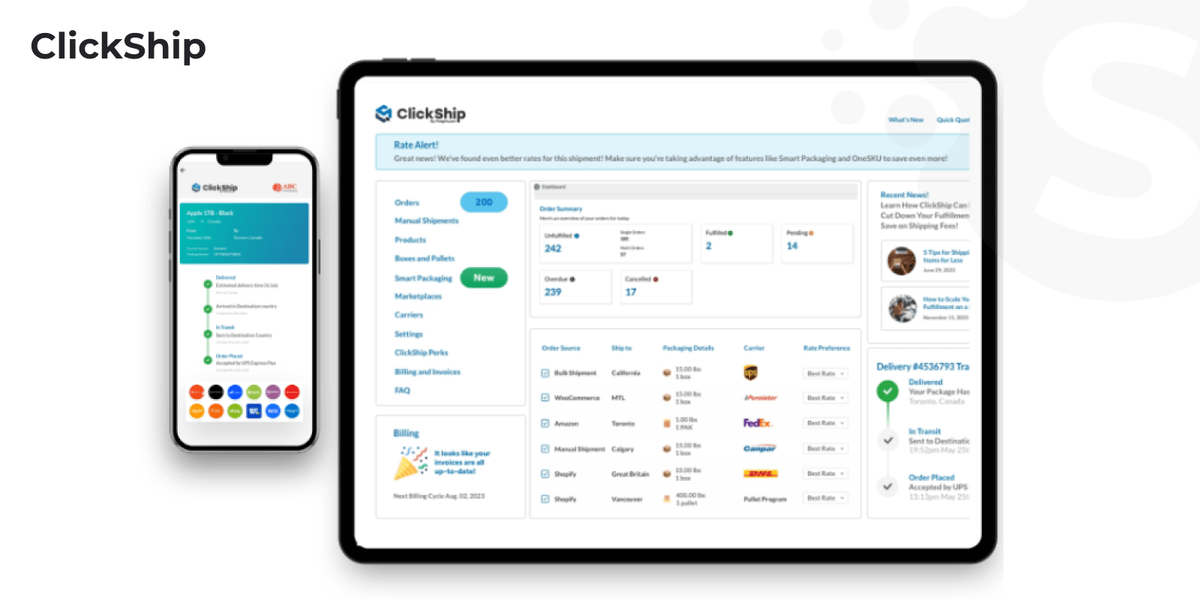
ClickShip makes e-commerce logistics easier for small and medium-sized online retailers. Order fulfillment, label creation, real-time rates, tracking, and analytics are all managed from one dashboard.
Smaller retailers can now compete with larger players without navigating complex logistics systems. By focusing on automation and competitive pricing, ClickShip opens the door to efficient and affordable shipping for a broader market.
Fin Mile Logistics
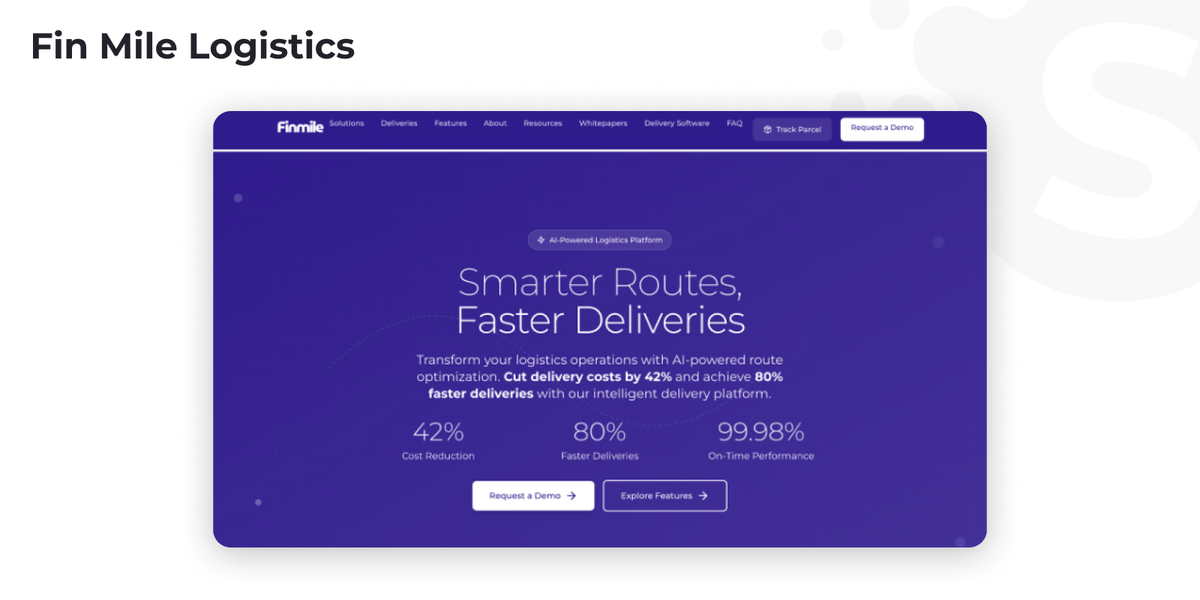
This organization is transforming last-mile delivery with a strong focus on sustainability. Fin Mile Logistics operates a fleet of electric cargo bikes and vans capable of accessing zero-emission zones while handling substantial loads. This reduces congestion and urban pollution.
Fin Mile also runs micro-fulfillment hubs in city centers and offers a warehouse-as-a-service model. Businesses can scale storage and services as demand changes. Combining green transportation, flexible warehousing, and comprehensive logistics creates a cost-effective and eco-friendly alternative to traditional delivery.
G2 Reverse Logistics
G2 Reverse Logistics specializes in managing product returns. Its Reverse Execution Analytics Platform (REAP) analyzes resale potential, labor costs, and vendor rules to optimize each return. The process increases recovery value, improves transparency, and reduces waste. G2 supports local drop-off points and advanced disposition methods.
UniUni
UniUni is expanding its last-mile delivery capacity with a gig-economy driver network. AI-driven route optimization lowers delivery costs and improves speed for major e-commerce platforms.
The company offers same-day and next-day shipping and adjusts quickly to demand surges. Its combination of intelligent routing and network flexibility helps businesses meet customer expectations for fast and affordable delivery.

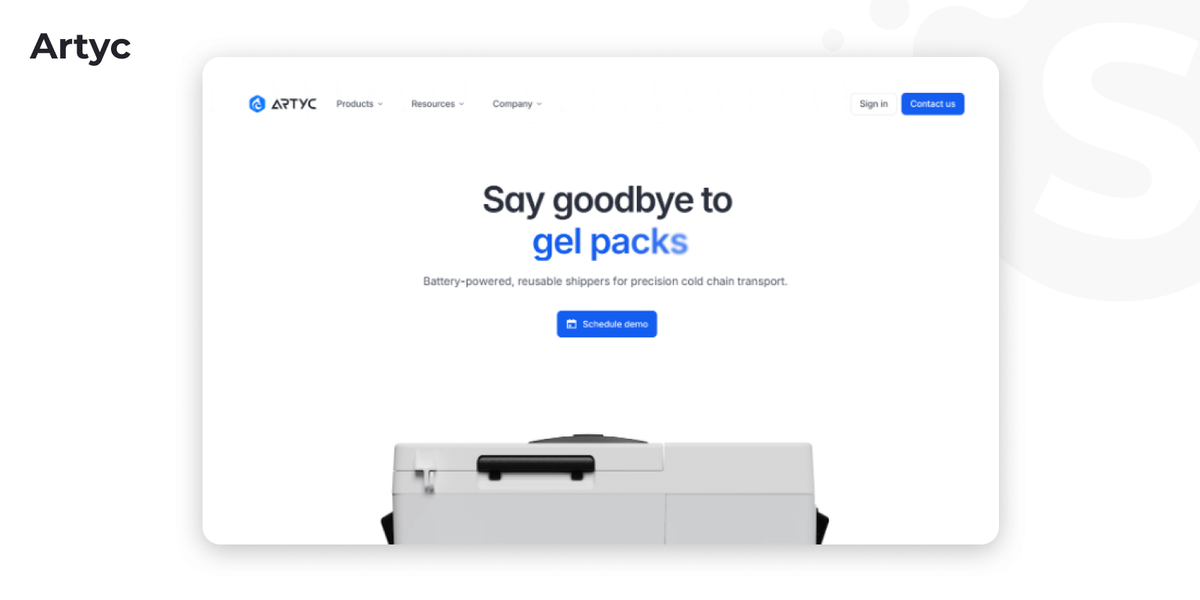
Artyc
Artyc is advancing temperature-controlled logistics with IoT-enabled, battery-powered coolers. These solutions maintain precise temperatures for sensitive goods such as pharmaceuticals, biologics, and specialty foods.
Real-time monitoring and predictive insights enhance cargo visibility and control. By reducing spoilage and minimizing reliance on disposable packaging, the company improves both operational efficiency and environmental sustainability.
Our Expertise
Softermii builds custom systems that solve complex logistics challenges and deliver measurable business results. With AI-powered tools, businesses can adapt routes instantly, forecast demand more accurately, and automate warehouse operations. The result is fewer delays, lower costs, and more reliable deliveries. Supply chains operate faster, smarter, and are better equipped to handle change.
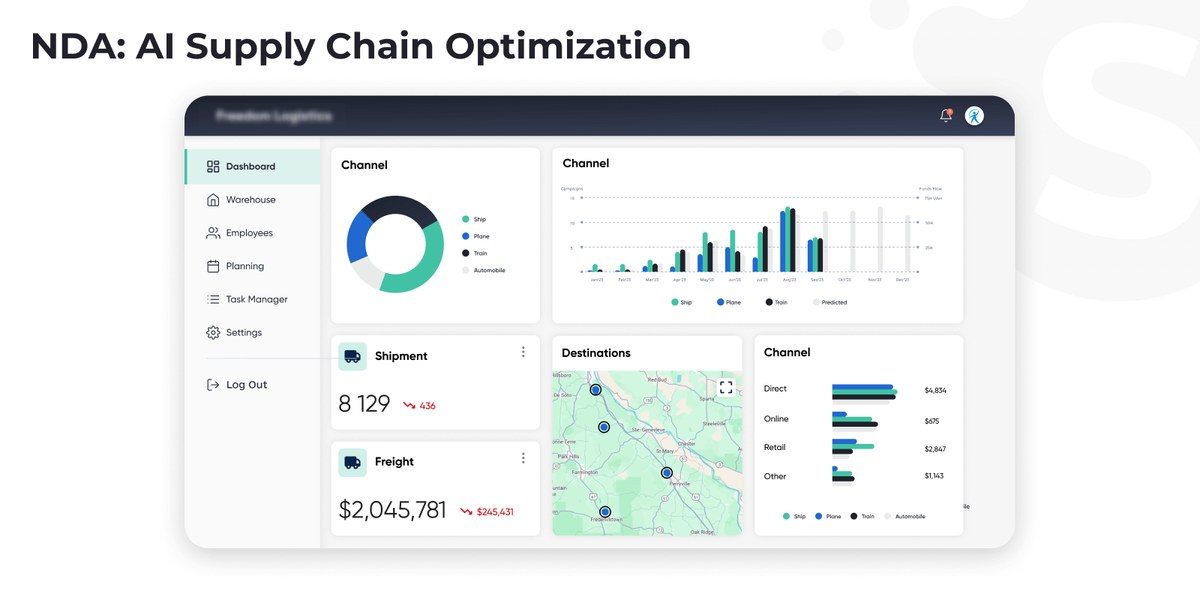
NDA: AI Supply Chain Optimization
We implemented a custom AI solution to help a global supply chain provider optimize inventory management and delivery operations. The platform combines sales data, supplier lead times, and seasonal trends with live operational inputs such as traffic, weather, and order changes.
The company gains proactive insights across multiple warehouses and regions. Machine learning forecasts demand, suggests automated replenishment, and optimizes delivery routes in real time. The outcome is greater efficiency, lower costs, and improved service reliability.
Key Features
- Real-Time Data Integration: Connects sales, warehouse, and transport systems for up-to-date insights.
- Adaptive Demand Forecasting: Predicts stock needs and route adjustments based on evolving patterns.
- Automated Replenishment: Sends alerts and purchase suggestions to prevent stockouts.
- Dynamic Route Optimization: Adjusts delivery paths in real time using traffic, weather, and load data.
- Automated Driver Assignment: Allocates deliveries based on location, capacity, and availability.
- Fuel Efficiency Algorithms: Reduces operational costs and environmental impact.
- Customizable Dashboard: Provides a clear view of inventory and logistics performance.
- Seamless Integration: Works with ERP and transportation platforms for smooth adoption.
Business Impact
- Reduced Fuel Consumption: Fuel use decreased by 18% within three months.
- Improved Delivery Reliability: On-time deliveries increased by 25%.
- Lower Operational Workload: Manual route adjustments dropped by 30% for dispatch teams.
- Enhanced Adaptability: The system reacts quickly to unexpected disruptions, improving customer satisfaction.
- Optimized Inventory: Steady stock levels prevent shortages and reduce waste.
- Greater Operational Efficiency: Automation frees teams to focus on higher-value work.
- Better Strategic Decisions: Actionable insights support leadership and operational planning.
Conclusion
AI technologies in logistics and transportation improve demand forecasting, route planning, inventory management, and equipment maintenance. Adopting these tools comes with challenges like inconsistent data, system compatibility, and a shortage of specialized skills.
However, a strategic approach reduces risk and smooths implementation. Many businesses already see clear benefits. They improve operational efficiency, reduce costs, and make sustainability gains.
At Softermii, we leverage deep industry expertise and customized solutions. We guide logistics companies through technology adoption and transformation. Contact our team for a personalized consultation. Our goal is to deliver measurable results that strengthen transportation and supply chain processes.
Frequently Asked Questions
How does artificial intelligence enhance logistics and transportation?
AI automates key logistics and transportation processes. It improves decision-making across operations. Companies use AI to automate order fulfillment and document handling. Delivery routes get optimized using real-time data.
AI forecasts demand more accurately, helping maintain a balanced inventory. It provides full end-to-end visibility of the supply chain. Fleet and driver performance can be monitored in real time.
Which AI technologies are most prevalent in logistics and transportation?
The logistics industry relies on several core technologies:
What advantages does AI bring to logistics?
AI delivers measurable business benefits:
Why is adopting AI critical for modern transportation services?
AI adoption keeps companies competitive and responsive. It enables a dynamic response to changing traffic, weather, and demand. Routes get optimized to reduce fuel consumption and emissions. AI supports scalable growth without losing efficiency. Predictive maintenance helps reduce downtime and safety risks.
How about to rate this article?
0 ratings • Avg 0 / 5 · Thanks for rating!
Written by:

CEO & Co-Founder
Slava Vaniukov is the CEO and Co-Founder of Softermii, with more than 10 years on the front lines of software development. He has spent that decade helping founders and enterprises turn ambitious ideas into products that ship — and that perform. Apps built by his teams have been featured on multiple “Top 10 Best App…