How to Create an Online Payment Platform Like Stripe

Want to know more? — Subscribe
Have you ever wondered why many startups aim to create an online payment app like Stripe? And what’s so special about this payment processing platform?
Have you ever wondered why many startups aim to create an online payment app like Stripe? And what’s so special about this payment processing platform?
Well, it’s a perfect example of a FinTech startup’s success. Stripe’s valuation grew from $20 million in 2011 to more than $95 billion in 2021. Still, while an attractive earning opportunity, online payment platform development is a relatively complex process.
You require much time and resources to build a payment processing app. But that shouldn’t stop you if you want to enter the evolving digital payments market. Just think that its total value is over $8 trillion today, and in 2027 it will reach more than $15 trillion.
So, do you want to learn how to make an app like Stripe? Our article will help you navigate this process and tell you how to avoid potential pitfalls you may encounter along the way.
Having a profound background in a FinTech niche, Softermii knows all the specifics of online payment platform development. And our successful products, Expedipay and SmartStart, prove that. Keep reading to discover the must-have features, tech stack, and costs of a Stripe-like app.
Want a skimmable version?
Get a quick overview of our article with AI to access all the important information quickly.
Generate AI SummaryHide summary
Want a skimmable version?
Get a quick overview of our article with AI to access all the important information quickly.
Generate AI SummaryHide summaryHow to create an online payment platform like Stripe — how it works, the challenges, the architecture, and the must-have features.
How Does an Online Payment Platform Like Stripe Work?
Stripe is a payment services provider. It enables merchants to accept credit and debit card payments in over 135 currencies. How exactly does this happen?
Stripe follows these steps to process a payment:
- First, the client specifies his card details.
- This card data is then sent to the Stripe payment gateway.
- Stripe, in turn, sends this data to the bank, which will process the transaction.
- The transaction is then transferred to the bank through a credit card network such as Mastercard or Visa.
- The bank then approves or rejects the transfer.
- Finally, the client receives a message about the success or failure of the transaction.
There are some payment processing platforms similar to Stripe on the market. One of the well-known examples is PayPal. Both platforms offer identical services for merchants, and it’s easy to sign up and start processing payments with them. The only difference between PayPal and Stripe is that the latter offers more customization options for online payments.
Stripe Business & Revenue Model
You’ve probably figured out the core of Stripe’s operation, so now you should learn about one more important thing: how exactly this platform makes money.
Stripe’s business model consists of two groups of clients: vendors and customers. Vendors are companies that want to accept payments from their customers, and customers are people who make purchases.
Stripe earns its profits by charging transaction fees. The platform charges a different commission depending on the payment type, such as international or online transfer.
After reading this, you probably thought that since Stripe’s workflow is so smooth, similar online payment platform development should be just as easy. Yet, creating such a product is not such an effortless activity. Learn about the main challenges in the next section of our article.
Challenges of Building a Payment Processing Platform Like Stripe
It is worth preparing for potential difficulties in advance if you aim to develop an app like Stripe. Knowing the challenges developers face will be handy in avoiding any possible problems or reducing their impact on your business.
So what should you be ready for?
It May Be Expensive
Creating a platform like Stripe is expensive, especially if you are building from scratch. You need to develop many custom features, pay for licensing, etc. If you plan to provide the platform’s functionality by implementing various APIs, you will also need to spend money on them.
It May Be Time-Consuming
You most likely want your payment processing platform to be successful and in demand among customers. Thus, your Stripe-like app or website must be compatible with various payment service providers. And it may take you a lot of time to create such a platform.
It Must Be Secure
The security of your payment system is of utmost importance. You need to hire top experts in this field to make your platform reliable.
It Must Be Competitive
Today, we’ve talked a lot about Stripe, one of the leading payment processors. But there are still many alternatives on the market. Take, for example, PayPal or Square into consideration. You should be ready for tough competition and try to stand out from the crowd.
Stripe Architecture Overview
If the potential challenges associated with building online payment processing like Stripe did not disturb you, then let’s look at the technical side of this platform.
Stripe offers several APIs that customers can easily integrate to start processing payments. In particular, these are the following applied programming interfaces:
- The Payment Intents API. Create integrations to handle complex payment flows with it.
- The Setup Intents API. With it, you can set up a payment method for future payments.
- Payment Methods API. This tool enables you to accept different payment methods.
To create an app like Stripe, you need to use the APIs or SDKs to integrate all the features necessary for your platform.
Features for Your Payment Processing Platform
Let’s now see what features you need to develop an online payment platform. The must-have ones are as follows:
Opening Accounts
Your platform must allow users to open accounts. Here, customers will enter their details, link their bank cards, etc.
Linking Bank Accounts
Your platform, as a payment processor, should allow customers to link their bank accounts.
Adding Debit/Credit Cards
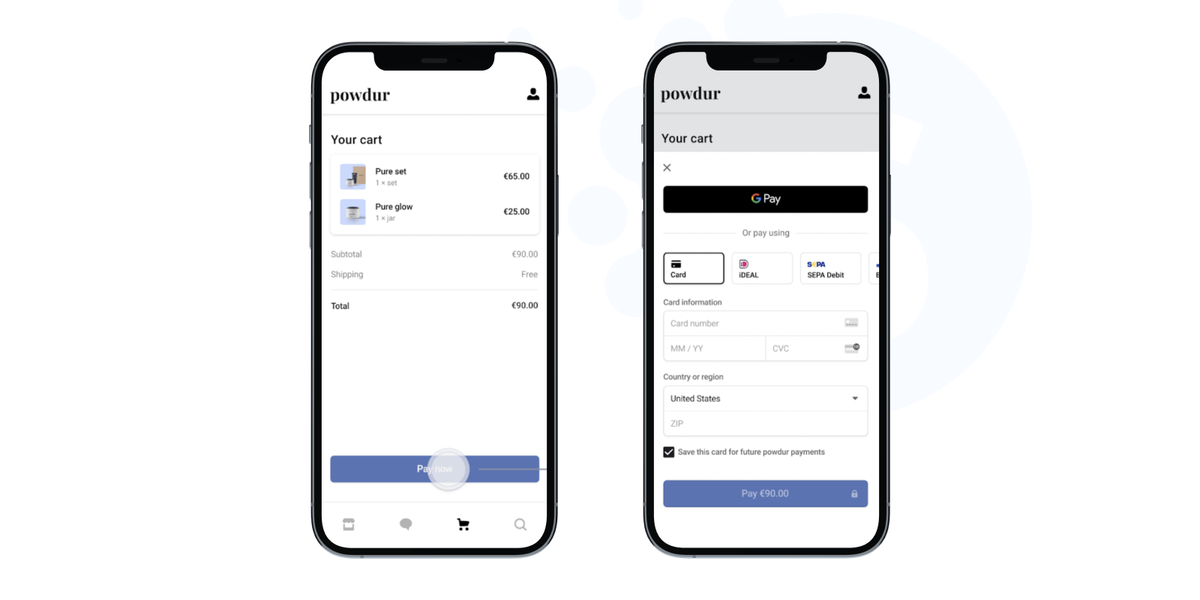
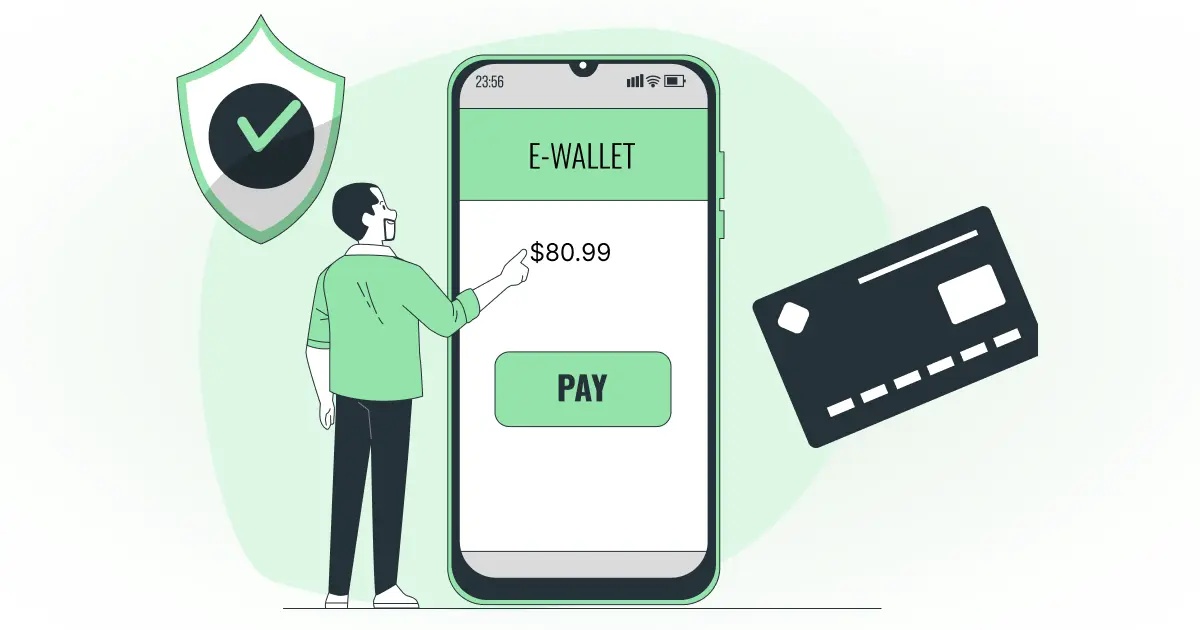
The feature to add debit and credit cards is the first step to processing a transfer through your platform. So make sure to implement it.
Completing Online Payment
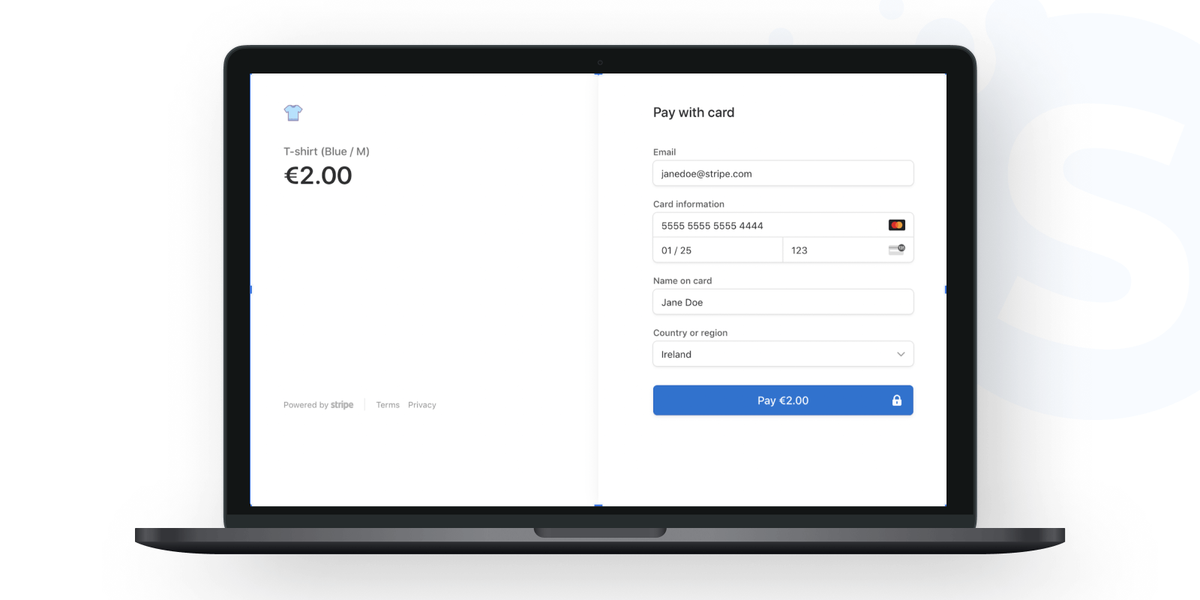
Be sure to enable your users to make online transfers through your platform.
Transaction Reporting
You can also add a transaction reporting tool to your platform. These reports should be sent to the user’s account.
Peer-to-Peer Payment Processing
The P2P payment app feature will be handy for your platform. It enables users to send and receive money directly from one another.
ID Verification and KYC
Knowing your customer and ID verification are features that will help increase security on your platform. It’s not only good for users but also for your company’s reputation in general.
Merchant-Specific Features
Also, think about the merchants using your platform. For them, you can add such features as dashboard and CRM capabilities.
Payment Gateways Access
Make access to multiple payment gateways possible. It can be Visa, Mastercard, PayPal, and more.
Push Notifications
Push notifications are a feature that will keep your users up-to-date on the latest changes in their accounts or your platform.
Contactless Technology
You must also ensure that your platform supports contactless technologies such as QR codes and NFC.
Cloud Services Platforms Can Help With an App Infrastructure
As a rule, only large companies can afford to equip their own IT infrastructure. For small businesses or FinTech startups aiming to build a payment app like Stripe, infrastructure is usually something that goes far beyond their budgets.
Fortunately, startups can take advantage of cloud services. Such services are hosted by third-party providers and are available to users via the Internet. Thanks to them, businesses get access to cloud infrastructure, which allows them to reduce costs without harming their system’s performance.
Popular cloud solutions include AWS, Google Cloud, and Microsoft Azure.
Required Tech Stack to Build an Online Payment Processing Platform
Want to learn how to build a payment app like Stripe? Then, it’s worth studying the tech behind it. This platform uses the following tech stack:
- Application and data: Ruby, NSQ, Apache Impala
- Utilities: Google Analytics, Amazon Route, Amazon SES, Mailgun, Mixpanel, Mandrill, Framer
- DevOps: CircleCI, PagerDuty
- Business tools: G Suite, Asana, Zendesk, HackPad, Respondly, Clara Labs, Pagerbot
You may use other technologies for coding, but you can take Stripe’s tech stack as a guide.
Security for Online Payment Platforms Like Stripe
Any FinTech app must ensure an advanced security level, and your payment processing platform is no exception. Take a look at Stripe’s example of exactly how you can make your app secure.
First of all, Stripe encrypts all data and communication on its platform. It uses PGP keys for this.
Furthermore, Stripe’s top level of security is a reality thanks to the platform’s compliance with various regulations.
In particular, it has PCI (Payment Card Industry) Service Provider Level 1 Certification. Stripe uses firewalls, data encryption, two-factor authentication, and other security measures per PCI requirements.
Stripe is also FDIC (Federal Deposit Insurance Corporation) compliant. For customers, this means that if something goes wrong with Stripe, it’s the company, not the customer, that pays the full damages.
One more thing you can consider during online payment platform development is compliance with the GDPR (General Data Protection Regulation). This regulation applies within the EU and contains requirements for personal data protection.
How Much Does It Cost to Develop an Online Payment Platform Like Stripe?
The cost of developing a Stripe-like platform will depend on many factors. Here are the main ones:
Features
The number and complexity of features will significantly affect the final cost. Also, the price will vary depending on whether it will be a custom development or if you will use ready-made APIs.
Tech Stack
You are already aware of how to make an app like Stripe. You also know which tech stack to use for this. Yet, because you don’t need to copy Stripe, you can choose other technologies for coding and design. And this choice of yours affects the final cost of the platform.
Dev Team Size and Salary Rates
Of course, you need workers to create a payment processing solution. The cost and development time will vary depending on your team’s size and salary rates. See which experts must be part of your staff:
- Front-end developer. It is the person who will be responsible for the implementation of the client part of your platform. It is better to involve several developers simultaneously, as we did in our P2P payment web and mobile app Expedipay.
- Back-end developer. This specialist will deal with the implementation of the server part of your platform and work with databases.
- DevOps engineer. Such engineers are responsible for establishing smooth cooperation between development and administration departments.
- QA specialist. This expert will test your platform for any bugs and limitations.
- UI/UX designer. This specialist will implement the general look and feel of your platform.
- Project manager. It is a person who will supervise your team and monitor the timely completion of assigned tasks.
- Business analyst. It is an expert who will help you build an effective business strategy by analyzing the market and your target audience.
These are the main factors affecting the development pricing. So let’s now find out how much a Stripe-like platform will cost.
We’ve prepared a step-by-step cost and time breakdown and a table with the approximate development price:
Discovery & Research stage
Time: 280 hours
Cost: $11 200
If you’re wondering how to develop an app like Stripe, this should be your very first step. Our business analysts conduct market research, analyze customer expectations, and assess industry trends in the first phase. All this information serves as a basis for project budget calculation.
It’s also the time when our design team creates a prototype and a concept. When creating the platform’s UI and UX prototypes, our team assesses to what extent the technology stack, functions, and overall aesthetics meet the client's expectations.
Development stage
Time: 640 hours
Cost: $25 600
Our experts create an early version of the entire product based on the selected technology stack.
Testing and launching
Time: 240 hours
Cost: $9 600
The testing and launching stage is crucial when you decide to build a Stripe-like app. It is essential to collect user feedback about the product to improve the application's functionality, make it more user-friendly, and exclude bugs.
After all testing and bugs are fixed, your Stripe clone app is ready to go. Remember that any service needs support even after release to compete on the market successfully.
Writing technical documentation
Time: 40 hours
Cost: $1 600
It is the last step of developing an online payment platform. It includes creating all the documentation for the application, particularly the product manual.
Let's summarize all of these in the table below:
| Development Stages | Hours | $ | |
|---|---|---|---|
| 1 | Discovery & Research | 280 hours | $11 200 |
| 2 | Development | 640 hours | $25 600 |
| 3 | Testing | 240 hours | $9 600 |
| 4 | Creating technical documentation | 40 hours | $1 600 |
| Total | 1 200 hours (5 month) | $48 800 |
Note that these are just approximate costs for initial payment processing app development. If you want a detailed cost breakdown for your project, drop us a line to discuss it.
Also, remember that choosing the right employees is critical for making development time shorter and price lower. And we at Softermii have plenty of experts to offer.
Our specialists have profound expertise in creating FinTech software. In particular, our dedicated teams know everything about Buy Now Pay Later apps, wealth management solutions like our SmartStart, and payment processing platform development.
Softermii Experience
SmartStart
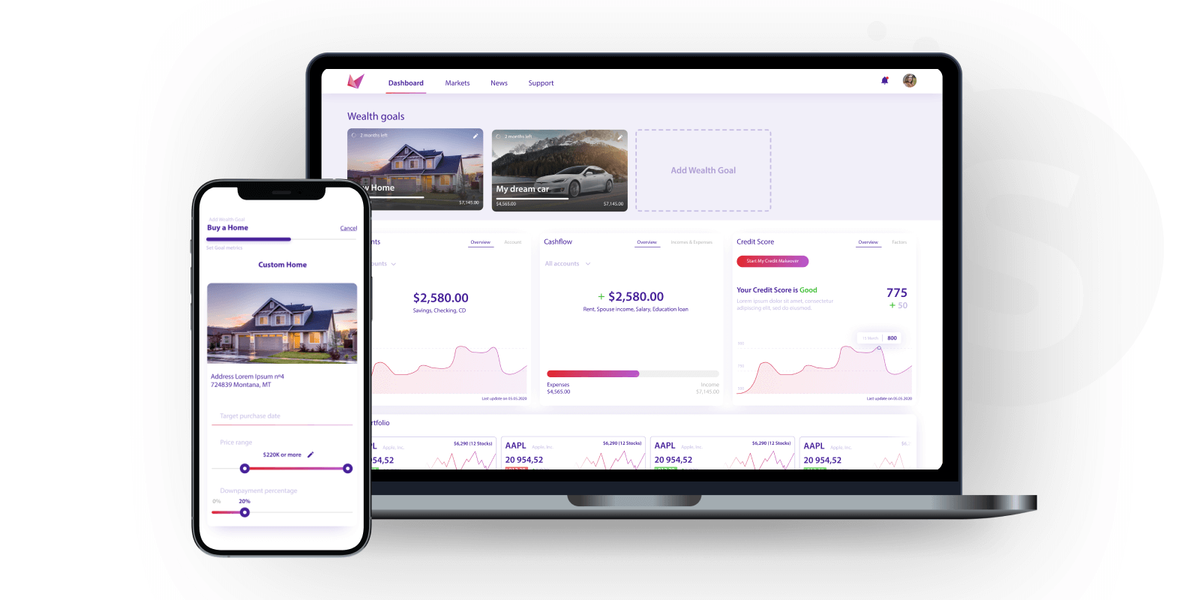
SmartStart is a combination mobile and web application designed to help people improve their financial outlook. The app provides users with real-time information about their current spending habits and loans information.
The founders of the American-based startup SmartStart wanted to build a compelling app for users who lack knowledge in wealth management. The goal was to come up with an all-in-one solution that would track all the spendings, loans, analyze spendings, and set up financial goals.
The app should have looked accessible for any type of audience, have multiple integrations with American banking systems, asset and property management platforms, and contain forecasting algorithms.
The application was divided into 3 components:
- Spending monitoring. It included spending analysis, segmentation into spending categories, future spending forecasting and personalized notifications when users approached the spending limit.
- Financial portfolio. It included asset management, setting up goals for potential savings (like apartment or car), property management (like rental income), and personalized offers for investments.
- Loan opportunities. The team developed a special algorithm that synchronized data with banks and provided the options with high probability of getting a loan.
Each component underwent numerous testings by focus groups and QA testers in order to make it easy to understand and control personal funds for people with no experience.
As for security measures, we used Two-Factor Authentication with the use of OAUTH2 login security protocol. In just two months after the release, 24,000 users joined the application. During this time, they conducted 1,296,000 transactions!
Expedipay
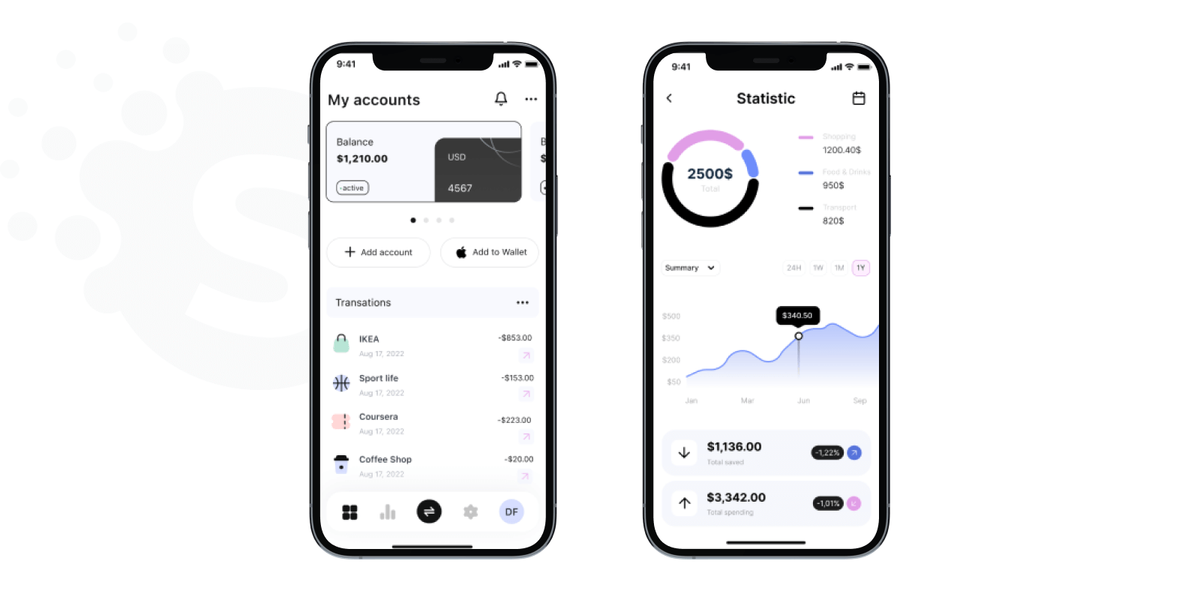
Expedipay is a mobile banking solution with secure P2P money transfers, wallet card list, live chat and fraud detection features.
The Expedipay team has decided to solve a problem with a lack of legacy banking infrastructure that has left nearly 2 billion people without access to basic financial services. There was a clear need to create a mobile and web fintech banking solution with secure and reliable access to all the needed financial services.
We’ve made user authentication as easy as possible while highly secured by adding eKYC integration that made the application fraud-proof. The team wanted the app to be as user-friendly and easy-to-use as possible while having a modern-looking, highly accessible and intuitive interface.
One of the main goals was to create an opportunity to add cards lists to the mobile Wallet. This would allow users to provide their payments quickly and easily. Our team came up with an idea to add the live chat feature so that users would have the possibility to address money operation support any time they needed it. The main feature of the app is a secure, easy-to-use and immediate P2P money transfer that can be made in just several clicks.
In the first three month on the market the app has been downloaded more than 4000 times, there were more than 1 350 000 transactions with 4.1 average transfers made by a single customer a day.
Final Thoughts
The development of online payment platforms like Stripe is a complex process that requires a lot of time and resources and compliance with numerous regulatory requirements, especially when it comes to payment gateway integration. However, once created, such a platform can potentially bring your business success.
We hope our article helped you better understand how to create a payment app like Stripe and how critical your team is in this process. Only with the right specialists will you be able to smoothly go through all the development steps and bring the idea of your FinTech solution to life.
If you need someone who can create a payment processing platform for you, Softermii specialists are ready to help. Our experts have a significant background in FinTech, having delivered numerous products with SmartStart and Expedipay included. So let’s discuss your project as well.
Frequently Asked Questions
What is the project scope when creating a platform like Stripe?
It doesn’t matter if you are making a smartphone or a web app, you should follow the following steps in your project:
It is a typical project scope to create a payment processing platform.
What SDLC model to choose when creating an online payment processing platform?
The Agile software development methodology is your best choice for online payment platform development. As part of this approach, the dev process takes place in short iterations, allowing you to quickly and easily make any changes to the product. You can read about other SDLC models in this article.
Is it possible to create only an online payment processing website or an application for one of the platforms (Android or iOS)?
Yes, it’s possible if it works for your business model. Yet, it’s better to think about solutions that will help you attract as many customers as possible. For example, instead of making a single Android or iOS application, it is better to convert to building a cross-platform solution.
How about to rate this article?
1431 ratings • Avg 4.9 / 5 · Thanks for rating!
Written by:

CEO & Co-Founder
Slava Vaniukov is the CEO and Co-Founder of Softermii, with more than 10 years on the front lines of software development. He has spent that decade helping founders and enterprises turn ambitious ideas into products that ship — and that perform. Apps built by his teams have been featured on multiple “Top 10 Best App…