20+ UX Deliverables & Methods You Should Include in Your Project

Want to know more? — Subscribe
Any business may find it challenging to create a design that reflects the product’s ideas, brings conversions, and is admired by users.
Any business may find it challenging to create a design that reflects the product’s ideas, brings conversions, and is admired by users. Then how to develop an engaging, user-centered, and conversion-optimized UI/UX? You must establish a consistent UX design process applying the most efficient UX deliverables for workflows.
But first, let’s return to the backbone of any successful design. It’s a concept of user experience (UX) design that entails various UX methods and techniques. They aim to improve the experience and utility users derive from a product or service.
If you still think your product is astonishing and there is no need to care a lot about its UX, you might be wrong.
Now, UX has grown to become a vital and indispensable step to building and growing your business. Often, a great product without an appealing user experience, despite being helpful and usable, does not always result in whooping success as a UX has undeniably important power to influence the ability of an enterprise to achieve its goals.
Keep reading our post to learn more about the importance of UX research deliverables and the most common ones you can use in your design process.
Softermii has vast expertise in delivering high-quality UI/UX for numerous projects, including Radiant, Soundit, and Dollar Shave Club. Thus, we can share valuable UX insights from our experience.
Want a skimmable version?
Get a quick overview of our article with AI to access all the important information quickly.
Generate AI SummaryHide summary
Want a skimmable version?
Get a quick overview of our article with AI to access all the important information quickly.
Generate AI SummaryHide summaryThe 20+ UX deliverables and methods worth including in a design project — and which phase of the process each one belongs to.
Why and How to Use UX Methodologies and Deliverables
Well, for now, you might have questions about why you need to apply these design methodologies and deliverables in your UX design process and whether they are helpful at all.
With them, you can create an engaging and efficient user experience design through which your product purposes and values will meet the customers’ needs.
Applying UX deliverables correctly allows you to make a design that not only highlights and promotes your brand but puts your product in a class of its own with a unique design that gets clients, viewers, or customers and keeps them coming back.
To get the maximum benefits, you need to use different UX methods and deliverables at the specific stage of the design flow. So, let’s remind that the web design process typically consists of the following phases:
- User and competitor research
- Defining the product value and design strategy
- Building the information architecture of product design
- Wireframing and prototyping
- Testing and evaluation
Each stage of the design process needs specific UX deliverables and methodologies to be applied differently.
According to Nielsen Norman Group, UX deliverable definition says it’s a record of the specific design work. They have also gathered data on what deliverables the design development team uses the most often:
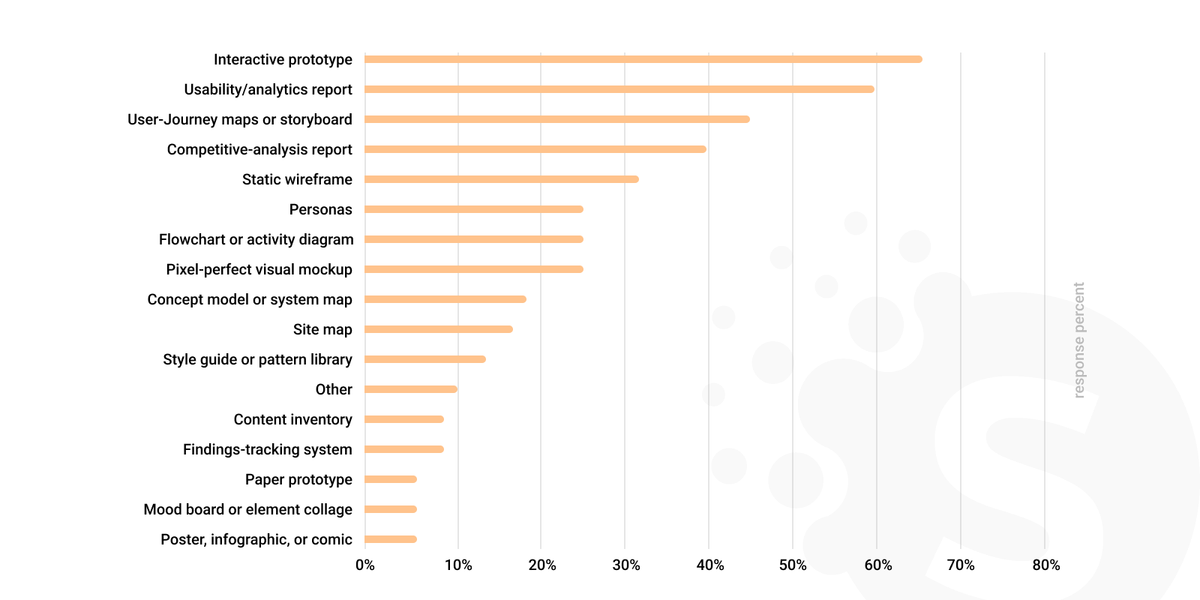
Source: Nielsen Norman Group
The need to apply some or other user experience deliverables differs according to the project’s specifications and target audience. Also, each stage of UX activities requires different methods to be used at each phase. But the general rule is that deliverables serve to document the most significant steps in the design process.

Choose among 120 software specialists
Hire an offshore dedicated team or a few team members for your project. We guarantee 10% of deviation in deadlines and cost.
Hire a teamTop 20 UX Deliverables & Methodologies
Now, keeping in mind the reasons to build your design process the right way, using deliverables in it, let’s discuss the core points of the most common UX deliverables in any project:
1. Stakeholders Interview
Use this method when developing the product design from scratch and during the first and subsequent interviews.
Stakeholders usually invest the most in the design project, including finance, time, and energy. During these sessions, you must ask a lot to understand the project goals, product design parameters, user insights, and assumptions.
After stakeholders’ interviews, you should create a design roadmap, timeline, and task assignment.
Thus, the main goal of the stakeholders’ interview is to develop the entire product design strategy and the KPIs to track its performance during the UX design process.
2. User Research
User research is one of the primary steps to the whole design process’s success. It, therefore, means that it has to be thorough and detailed. Designing without in-depth user research will eventually lead to the market failure of the product.
User research involves studying your target audiences and developing buyer personas, e.g., persons who use the product, and then defining what design elements are critical for them. Here you can mention such techniques as users’ stories and use cases.
3. User Interview and User Survey
These deliverables mean running user interviews and surveys on future or existing design usage. Thus, they can be used in the user research or design testing stages. They are how UX designers can measure users’ satisfaction with their products.
4. Competitive Audit
Competitive audit as a UX deliverable is used at the research stage.
It is purposed to study and analyze your competitors’ products and find some uncovered gaps in their design. You can observe what’s missing in their digital solutions and use this information to your benefit.
Another idea of this competitors’ research is to determine what works for competitors and what doesn’t. Then you keep that data in your mind and consider it during your product development.
5. Product Value and UX Value Proposition
It is used after having a stakeholder interview. Defining what values your product has is the backbone of the design strategy.
Product value is a kind of its USP (unique selling proposition), e.g., the core aspects of the product that distinguish it from all other similar ones on the market. The details of product value conception lay behind what it needs, including what the product is, who it is for, what customer problems it solves, and what key benefits it has.
Besides its marketing conception, it should be applied in design development, which is named the UX value proposition. It’s highly important that the main idea of your product values be consistent, coherent, and reflected visually in its design.
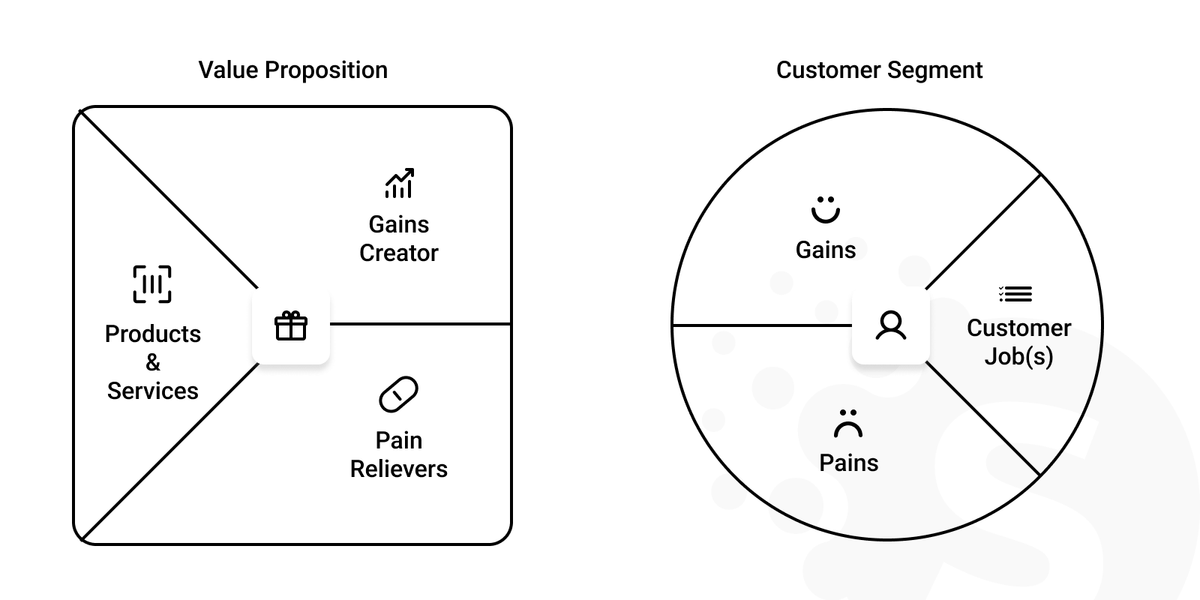
That means that your product design should highlight its unique values. Thus, before design development, your designer’s team and the marketing department must figure out what values your product has and what emotions its visual look needs to appeal to people. Based on that idea and putting it in the core, you can develop a UI/UX strategy.
Then you will double the effectiveness of the product message you’re trying to deliver to the customer.
6. Product Design Strategy and Product Roadmap
Developing a product roadmap is creating a plan for the entire design process and its every step.
These techniques can’t be missed as they guide designers during all steps of the product design life-cycle and define the product-specific attributes.
A product strategy allows UX designers to zero in on specific target audiences and draw focus on product ideas and consumer attributes. It’s quite simple, but it works.
7. Customer Journey Maps
Usually, designers use this deliverable after user research, product strategy, and roadmap development, the same as during the testing and evaluation stages. It shows how users will use the product, frames their motivations and needs, and adapts the product for that.
8. Information Architecture Deliverables
Creating the information architecture involves the processes that line up with arranging and fixing data into information that can be easily understood. As the name implies, it is all about building pieces of information to give it perfect meaning.
The information architecture process for digital products creates such deliverables as content organization, navigation, site maps, taxonomies, and decision tables, e.g., precise design documentation and wireframes.
9. Mind Mapping and Prototyping
These UX deliverables can also refer to the information architecture. It would help if you used these deliverables during the wireframe and prototype stages.
They are aimed to develop a product’s informational structure, e.g., information architecture, structure, workflows, and navigation. Developing mind mapping and interactive prototyping helps you visualize your design’s final look before its development.
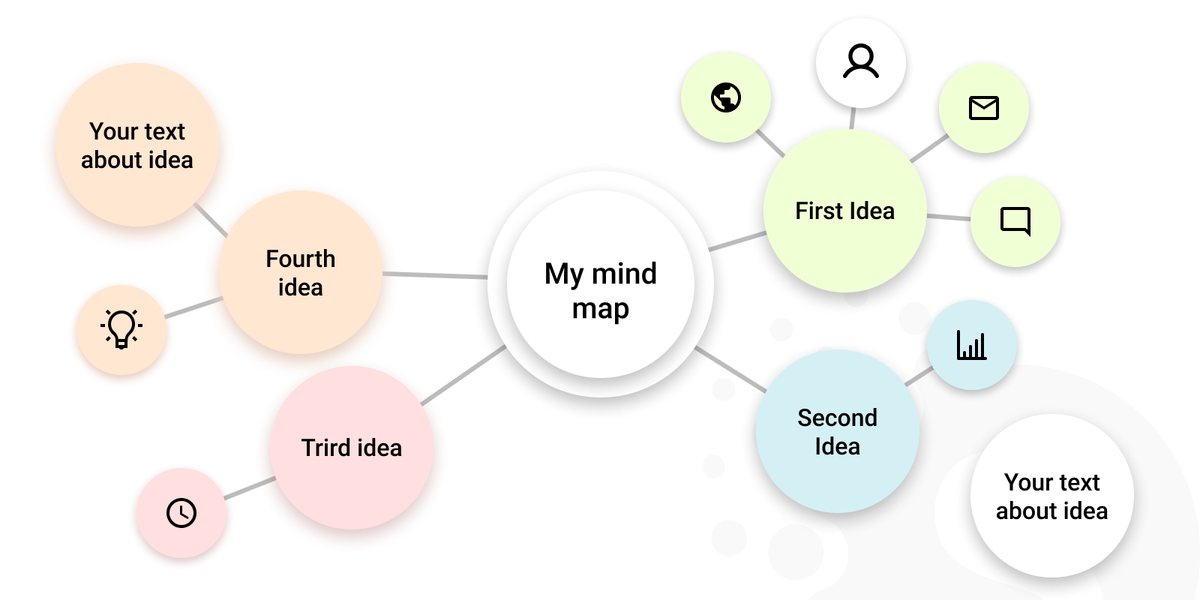
That helps designers to generate new ideas and reduce the number of edits after deployment. So, these techniques are truly worth using, besides there are a bunch of tools for much easier prototyping and site mapping.
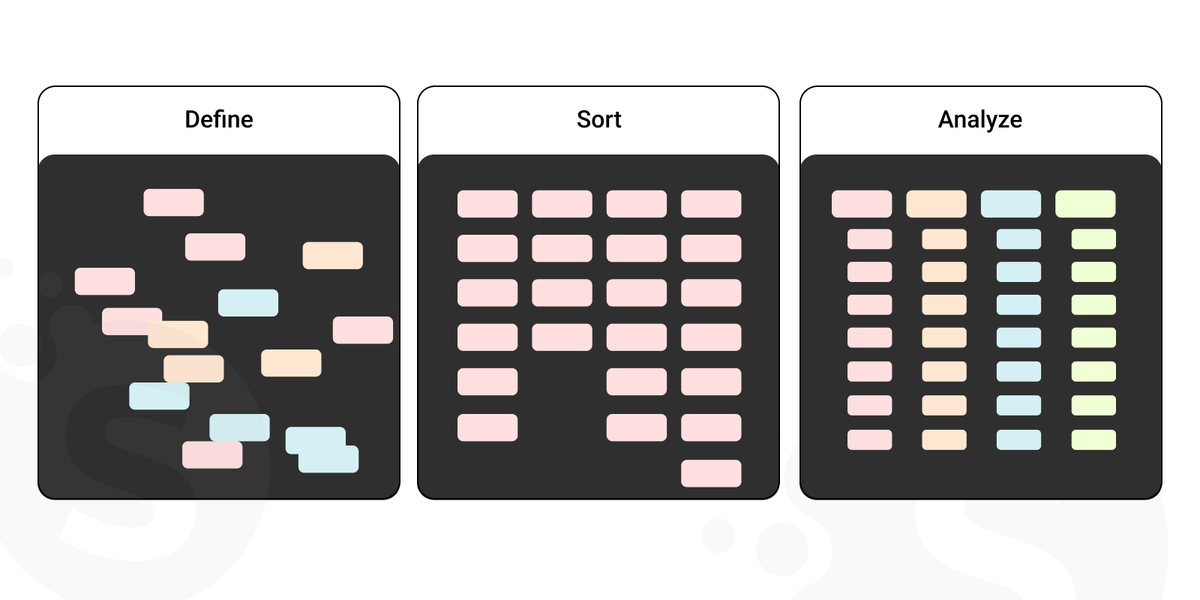
10. Card Sorting
Designers can apply this UX deliverable during information architecture development as the evaluation and testing stages.
Card sorting as a UX exercise is a method that is also used in developing information architecture. A group of users conducts it. They do so by arranging the cards with parts of information structure elements to represent how they see the full information structure of the product.
11. Brainstorming Technique
This technique is a common project management deliverable not only for UX. But it is used during every stage of the design process. It helps generate new ideas to solve problems.
12. Cultural Probes
Cultural probes are a commonly used technique that is quite similar to brainstorming. It is used to find new ideas in a design process and to gather inspirational data about people’s lives, values, and thoughts.
It’s a well-known fact that cultures influence design perception. It means people can consider and interpret the same design differently depending on their origin cultures. After executing this deliverable, you can know how to optimize your UX design for people of different cultures if your product targets a worldwide audience.
13. Usability Testing
This technique is sometimes used during the user research stage and more often during the evaluation stage.
This UX method can define the problems in product usability and improve it. It can be done through testing in a focus group, A/B testing, UX tree, guerilla testing, accessibility audit, and eye-moving tracking.
14. Guerrilla Testing
Guerrilla testing is one of the simplest methodologies. It can be conducted anywhere and anytime if your product is physical. It involves a researcher walking up to a relevant audience and asking what their experience of the product has been.
15. Competitive Audit
A competitive audit is another methodology. It is usually a detailed analysis of the features of similar products that have granted them the leverage with which they operate in the market. As the name implies, you are spying on your competitors to discover what works for them so you can learn these strategies and not be left out in the competition.
16. A/B Testing
UX A/B testing is another helpful technique. With this, you provide your product alongside a supplementary product to different users to observe and record their reactions. The goal here is to find out which one performs better and discover the areas of your product that you need to improve.
17. Focus Groups
A focus group is a more subtle user experience strategy. It is a moderated discussion that usually involves about 5 to 10 participants. You bring people to discuss issues and concerns about the features of a user interface. The group typically lasts about 2 hours and is run by a moderator who maintains the focal point of the group’s discussion.
18. Heuristic Evaluation
Heuristic evaluation is a so-called usability inspection technique used in the testing and design evaluation stage. You may have heard about Nielsen and Molich’s 10 User Interface Design Heuristics, which are the guidelines for any design development.
But what distinguishes this technique is that it is purposed to focus on specific UI design elements, e.g., your heuristics. This technique highlights their bad and good sides that hugely impact user interactions.
Usually, heuristic evaluation needs to involve between five and ten items of the product, website, or application design. Important to note that the evaluators should not be your end-users but experts in your business industry. Then after conducting a heuristic evaluation, you will get the most valuable results.
19. Usability Test Report
Usability testing determines the degree of ease users encounter when using the product.
The usability test report ought to be tested on real users. The test report summarizes the findings in a clear, concise, and descriptive way. It is handy for project teams. They use it to identify the issues in the proposed design or working design and point them in the right direction toward finding a suitable solution.
According to Nielsen Norman Group , UX deliverable definition says it’s a record of the specific design work.
20. Analytics Audit
An analytics audit is one of the types of UX deliverables. It entails the processes involved in discovering the particular parts of a website or an app that are having issues with users, thereby reducing the brand’s conversion rate and optimizing them.
21. Content Strategy
Content strategy is a UX deliverable that involves planning the publication of any content in a digital product. It is critical to promote your product once it hits the market.
Designers may not necessarily be directly involved in the development of content strategy. However, they should familiarize themselves with it so that the UI/UX matches your communication style.
22. Sitemaps
Sitemaps are next to wireframes in importance. You usually deliver them at the design strategy stage, based on which you build the information architecture. Sitemaps serve as an overall structure of your product with hierarchically arranged elements.
Let’s summarize all these UX/UX deliverables, including the design stage to create them and their core purposes. Look at the deliverables in the table below:
| UX Deliverables & Methods | UX Deliverables & Methods | UX Deliverables & Methods | UX Deliverables & Methods |
|---|---|---|---|
| UX Deliverable | At What Design Phase to Deliver | How Often to Deliver | Intended For |
| Stakeholders Interview | During the research stage | Not often | The design team |
| User Research | During the research stage | Not often | The design team and stakeholders |
| User Interview and User Survey | During the research stage | Not often | The design team and stakeholders |
| Competitive Audit | During the research stage | Not often | The design team and stakeholders |
| Product Value and UX Value Proposition | During the research and design strategy stages | Not often | The design team and stakeholders |
| Product Design Strategy and Product Roadmap | During the research and design strategy stages | Not often | The design team and stakeholders |
| Customer Journey Maps | During testing and evaluation | Mostly once | The design and development team |
| Information Architecture Deliverables | During the information architecture creation stage | Mostly once | The design and development team |
| Mind Mapping and Prototyping | During the wireframing and prototyping stages | Mostly once | The design team |
| Card Sorting | During testing and evaluation | Whenever it is necessary | The design team |
| Brainstorming Technique | During every stage | Whenever it is necessary | The design team |
| Cultural Probes | During every stage | Whenever it is necessary | The design team |
| Usability Testing | During testing and evaluation | Whenever it is necessary | The design team and stakeholders |
| Guerrilla Testing | During testing and evaluation | Whenever it is necessary | The design team and stakeholders |
| Competitive Audit | During the research stage | Not often | The design team and stakeholders |
| A/B Testing | During testing and evaluation | Whenever it is necessary | The design team and stakeholders |
| Focus Groups | During testing and evaluation | Whenever it is necessary | The design team and stakeholders |
| Heuristic Evaluation | During testing and evaluation | Whenever it is necessary | The design team and stakeholders |
| Usability Test Report | During testing and evaluation | Whenever it is necessary | The design team and stakeholders |
| Analytics Audit | During testing and evaluation | Whenever it is necessary | The design team and stakeholders |
| Content Strategy | During testing and evaluation | Whenever it is necessary | The design team |
| Sitemaps | During the design strategy | When you first build your product and when considering any updates | The design and development team and stakeholders |
The Importance of UX Deliverables and Techniques in the UX Design Process
UX deliverables are critical to the design process’s success and are the medium for achieving the best user experience.
The “design” aspect of UX focuses on improving the utility, ease of use, and efficiency of a user’s interaction with a product or service. Thus, the UX deliverables and techniques serve as the design’s foundation.
Deliverables and techniques perform the following functions in the design’s efficiency:
- They help to build your design process consistently and clearly and improve the design teamwork on your project.
- They are helpful in the ongoing evaluation of designs at every development stage.
- They are responsible for obtaining the bricks of data needed for constructing a highly efficient and usable design.
- They are the drawing boards upon which the continuous improvement and polishing of the designs are constructed and worked out.
- They are critical to getting the input and deriving outputs that are processed and now called — UX design.
The general rule is that deliverables serve to document the most significant steps in the design process.
The choice of the UX deliverable depends on the UX design process, and it can vary across different teams. Creating a user experience that perfectly suits the customers and leaves them satisfied is not a single person or team’s responsibility. It is, instead, more of a company’s vision.
So, with all hands on deck, it will then be possible to create designs that are a clean, simple, intuitive, flexible, and engaging experience for your users and thus differentiate you from your competitors.
Read Also: 15+ eCommerce Mobile App UX Design Tips.
What Mistakes To Avoid
When it comes to the UX design process, you can stumble through some limitations and challenges. That may happen if you make the following mistakes along the way:
- You do not find a balance between the functionality and aesthetics of the product.
- You ignore your users’ needs and feedback.
- You only consider ideal scenarios overlooking unforeseen circumstances.
- You overwhelm users with too much information displayed in your product, abandoning heatmaps, content strategy, and other UX deliverables.
- You ignore responsive design.
You can avoid these pitfalls effortlessly. How to do that? Use UX deliverables and methods in your design process.
Softermii Experience
Softermii is a trusted IT vendor with over eight years of experience and numerous successful projects. Our team can provide both design services in combination with product development and UI/UX as a standalone option.
Our extensive portfolio stretches from eCommerce to FinTech niches, and here are some of our product examples:
Radiant
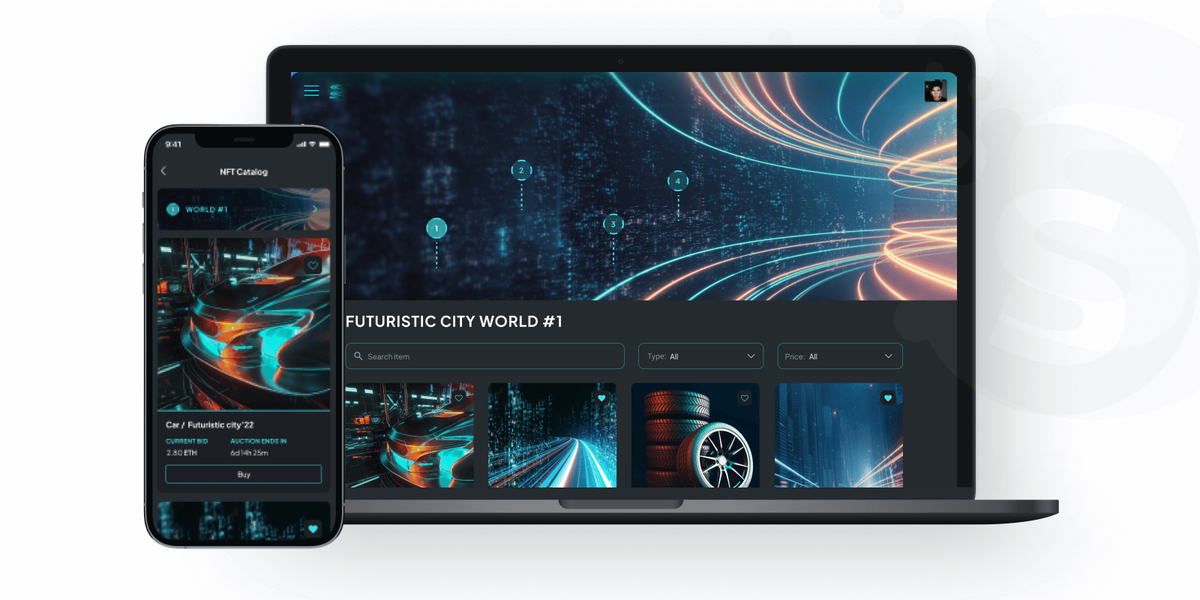
Radiant is an NFT marketplace with minting features. It leverages blockchain and point cloud technology, creating a unique space for digital artists.
Our team had to implement many innovative design features into this app. We added the ability to view digital worlds in 3D and worked on point cloud creation to enable artists to share snapshots directly in the application.
Soundit
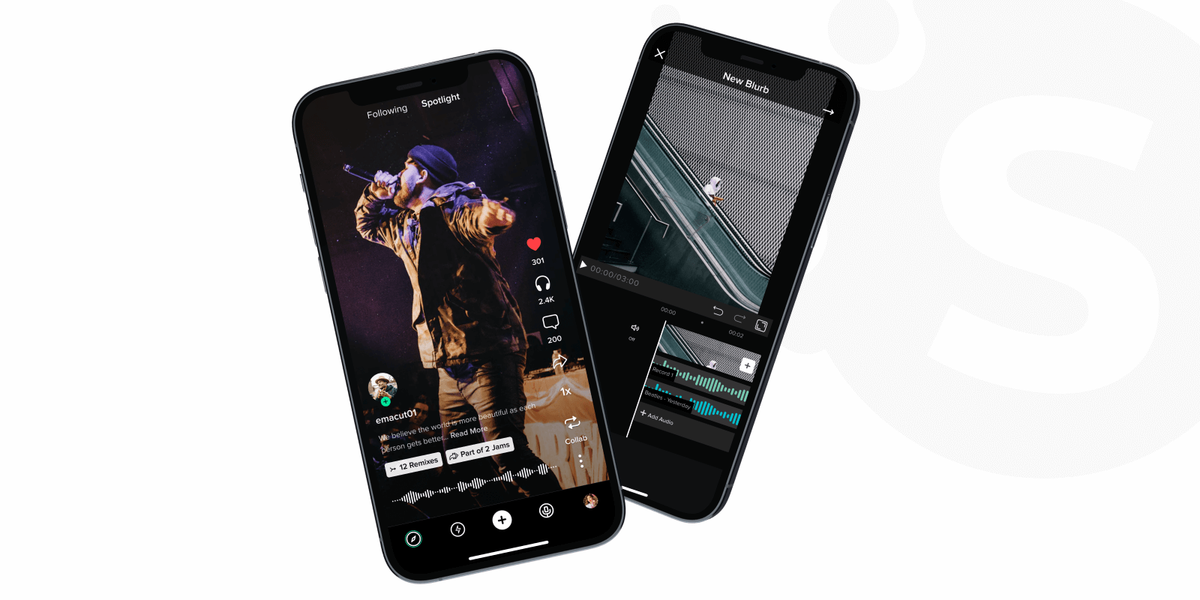
Soundit is a decentralized social app focused on audio content that emphasizes top-notch user experience. It also allows users to earn money and become famous quickly, owing to specific algorithms.
Our team paid particular attention to the design of the application. We made it intuitive and accessible: everything to attract more users. We also thought out the UX so anyone can easily create and edit audio within the app. Among other features, we have added various browsing content and user interaction methods.
Dollar Shave Club
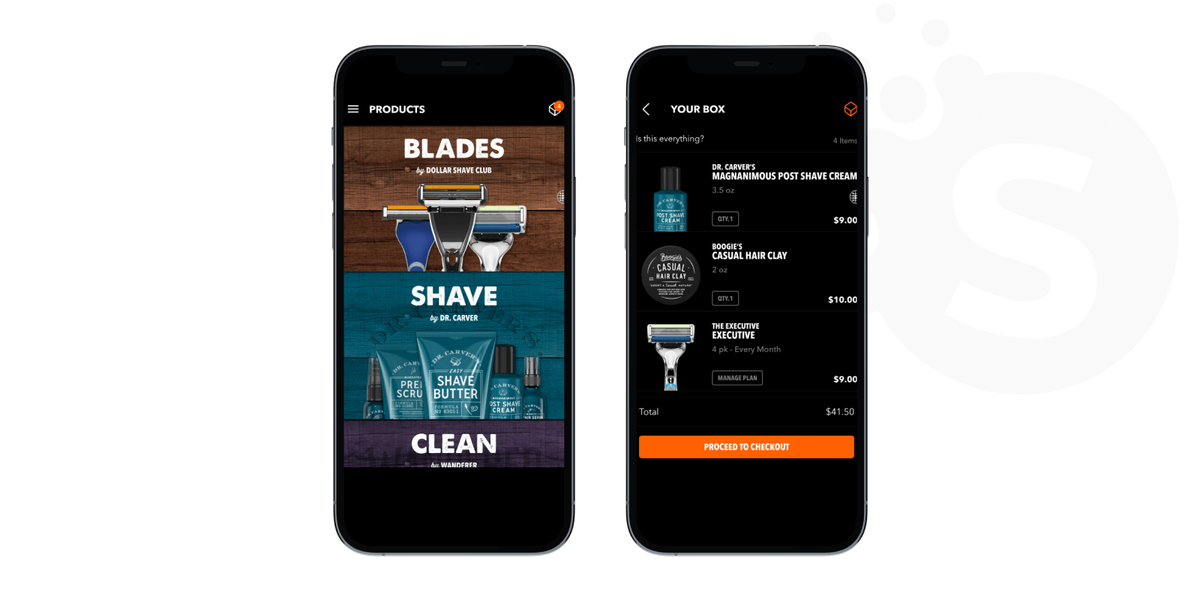
Dollar Shave Club is an eCommerce store with men’s shaving products.
Our team was responsible for redesigning the mobile app since the previous UI/UX proved ineffective. We significantly improved the application’s usability and speed. We also added new features like credit card scanning to make Dollar Shave Club even more convenient.
Conclusion
The UX deliverables and techniques we mentioned today are significant for the entire UX design process. Their use directly influences your sales and customer satisfaction.
At Softermii, our design team truly cares about applying all these strategies in product design development for our clients within our UX Toolkit.
If you require an exceptional UX design to move you up your growth ladder, then outsourcing your project might be the best and most cost-savvy solution. So feel free to contact our expert team and get your top-notch UX design.
Now, UX has grown to become a vital and indispensable step to building and growing your business .
Frequently Asked Questions
What are UX deliverables?
UX deliverables are design elements, documentation, reports, etc., that the designer creates at various stages of the UX process.
What are UX research deliverables?
UX research deliverables are insights obtained based on user and other kinds of research. For example, they are usability testing reports, user personas, sitemaps, etc.
What are the stages of UX design?
The core stages of UX design include
What are the deliverables in UI design?
UI deliverables are the tangible results of the design work done. For example, those can be ready-made informational or navigational components of the product.
How about to rate this article?
583 ratings • Avg 4.9 / 5 · Thanks for rating!
Written by:

Co-Founder
Andrii Horiachko is a Co-Founder of Softermii with over 12 years of experience in software development, eight of them spent building and managing Softermii itself. He is responsible for technology-innovation in clients’ projects, making sure every product runs on a modern, carefully chosen tech stack that can sustai…